Helping an ageing parent eat well from a distance: a weekly routine
You cannot cook every meal from 200 miles away, but you can build a rhythm that keeps food and drink on track and spots trouble early. Here is a seven-part weekly routine built on NHS and British Dietetic Association advice, with a call script, a sibling rota and the signs that mean act now.

Last reviewed 6 November 2026 · Checked against NHS guidance · 13 min read
The routine in brief
Pick one longer weekly call and use the same short script each time: what they ate yesterday, what they drank, what is in the fridge and how they feel. Add one video meal a week so you can see the plate and the kitchen. Keep drinks on a simple anchor plan, since the NHS says older people should get plenty of fluids and the government recommends 6 to 8 cups or glasses a day. Set up a repeat food delivery, share the jobs between family on a written rota, and agree in advance which signs mean a GP appointment, NHS 111 or 999. Look after yourself too: the NHS says any adult who looks after someone regularly can ask the council for a free carer's assessment.
This guide is written for the son or daughter who lives a train ride or a flight away and worries every time the phone rings. It sits alongside our family caregiving courses, and it assumes your parent wants to stay independent. Every step is designed to support their choices, not to take over.
What eating well looks like for an older parent
Before you check anything, it helps to know what "good" looks like. The British Dietetic Association's tips for older age suggest spreading food across six small eating occasions a day, with protein foods, starchy carbohydrates and plenty of fruit and vegetables. The NHS page on keeping bones healthy after 65 adds that calcium, vitamin D and protein matter for muscles and bones, and that keeping to a balanced diet is important even when appetite drops. If you want a refresher on the food groups themselves, our Eatwell Guide explained on a real UK plate covers them.
For a long-distance check, that boils down to a handful of things you can ask about:
The BDA also notes that Department of Health advice is for people over four to take a 10 microgram vitamin D supplement, especially at-risk groups that include people over 65. If your parent is not sure whether that applies to them, a pharmacist or GP can advise, particularly if they take other medicines.
The 10-minute weekly call: a script that works
"Are you eating properly?" almost always gets "Yes, fine." Specific, friendly questions get real answers. Use the same four areas each week so changes stand out, and jot the answers in a shared note.
Food
- What did you have for lunch yesterday?
- Did you have anything in the evening?
- What are you planning for tomorrow?
Listening for: real meals named, not "bits and pieces"; the same answer three weeks running.
Drink
- How many cups of tea have you had today?
- Is there a glass of water by your chair?
- Are you drinking less so you do not need the loo at night?
Listening for: fewer drinks than usual, or cutting back on purpose.
Kitchen
- Did the shopping arrive, and was anything missing?
- What is left in the fridge?
- Is anything hard to open or reach?
Listening for: an empty fridge, or one full of the same uneaten food.
Them
- Who have you seen this week?
- How are you sleeping?
- Anything bothering your teeth or mouth?
Listening for: no contact with anyone, low mood, sore mouth or dentures.
The NHS advice on loneliness in older people notes that a simple friendly chat or phone call can make all the difference, and that a weekly call can be enough. So keep it warm: share your news first and let the food questions fit into a normal conversation.
What a video call can show you that a phone call cannot
Once a week, eat a meal together over video. The NHS suggests making mealtimes social, and sharing a plate on screen is the long-distance version. It also lets you notice things your parent would not think to mention. The BDA lists clothes, dentures, belts or jewellery becoming loose among the warning signs of unplanned weight loss.
- How big is the portion, and how much is left at the end?
- Do a jumper, watch strap or ring look looser than before?
- Is chewing slow, or are dentures left out?
- Is there a drink within reach during the meal?
- Could they show you the fridge shelves for a few seconds?
- Do they seem more tired, quiet or muddled than last week?
Ask permission before you ask to see the fridge, and keep it light. Most parents are happy to give a tour if it feels like interest rather than inspection. If you think weight has dropped, our guide to signs of malnutrition in older people explains how professionals judge whether a loss is significant.
A drinks plan they can follow without you
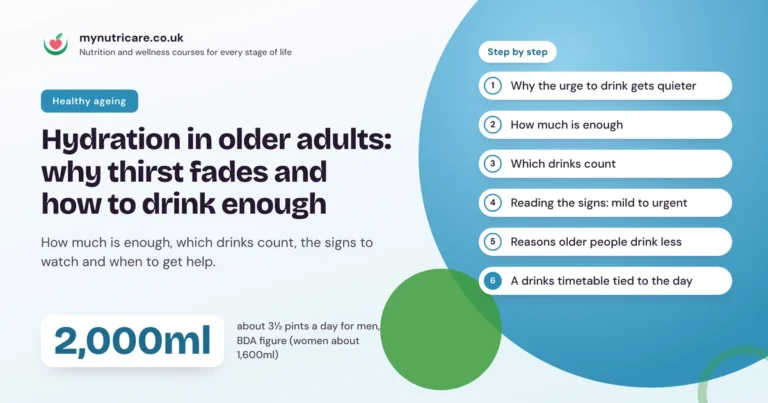
The NHS says older adults are more at risk of dehydration and that people over 65 should get plenty of fluids. The BDA puts it as 6 to 8 glasses a day, at least 1.5 litres, and says tea and coffee within recommended limits can count. The NHS water and drinks page agrees that water, lower-fat milk and lower-sugar drinks, including tea and coffee, all count, and that fruit juice and smoothies are best kept to one small glass of 150ml a day, with a meal.
Rather than asking a parent to "drink more", tie a drink to things that already happen every day:
Seven anchors make it easy to reach 6 to 8 drinks. If your parent's GP has advised a fluid limit, follow that instead.
The NHS dehydration page has three ideas for carers that work well from a distance: help them drink at mealtimes (your video meal counts), make drinking social, and offer foods with lots of water in them, such as soup or melon. Keeping fluids within reach matters too, so a flask or a lidded bottle by the favourite chair is worth sending. Where appetite is poor, the NHS also suggests avoiding big drinks just before a meal, so a small drink alongside the food may work better than a large one first.
A repeatable easy week, planned once
Decision fatigue is real when you cook for one. The NHS suggests building favourite foods into a weekly meal plan, so plan a single week together on a call, then let the same pattern repeat with small swaps. Keep each day to things your parent can make, or that arrive ready.
| Day | Breakfast | Midday | Evening | Snack ideas |
|---|---|---|---|---|
| Mon | Porridge with milk and banana | Soup and a cheese sandwich | Fish pie ready meal, peas | Yoghurt pot |
| Tue | Wholegrain cereal with milk | Beans on toast | Frozen portion of stew, potatoes | Crackers and cheese |
| Wed | Boiled egg and toast | Video lunch together: their choice | Pasta with tinned tomato sauce and tuna | Fruit loaf |
| Thu | Porridge with tinned fruit | Jacket potato with cheese and beans | Chicken casserole ready meal, carrots | Custard pot |
| Fri | Toast with peanut butter | Sardines on toast, tomato | Omelette with frozen mixed veg | Rice pudding |
| Sat | Cereal and a glass of milk | Leftover from Friday, or soup | Shepherd's pie portion, greens | Malt loaf |
| Sun | Scrambled egg and toast | Roast dinner, home or out | Light tea: sandwich and fruit | Hot chocolate |
Turn the plan into a repeat online order delivered on the same day each week, so the right food is always there. The BDA suggests ready meals, batch-cooked freezer meals, online shopping and meal delivery as ways to cope on difficult days. If appetite is small, the NHS idea of small meals or snacks every 2 to 3 hours fits the snack column.
Turn worry from afar into a plan the whole family follows
The Supporting an Ageing Parent course covers the parts of long-distance caring that food alone does not:
- Telling slow change from an urgent warning sign
- Dividing responsibilities fairly, including from a distance
- A shared appointments log and the right questions for appointments and hospital discharge
Signs that mean act: agree the ladder in advance
Distance makes it hard to judge how worried to be. Agree this ladder with your parent and siblings now, so nobody has to decide in a panic. The urgent rungs come from the NHS dehydration and malnutrition pages.
- One poor week of eating with an obvious reason, such as a cold
- A missed delivery or a fridge that needs topping up
- Feeling thirsty, a dry mouth or a headache that settles with drinks
- Clothes, rings or dentures getting loose, or weight dropping without trying
- Little interest in food or drink for more than a week or two
- Unusual tiredness, dizziness on standing that does not go away, or dark yellow pee or much less pee than normal
- Coughing or choking with food or drink
- Confusion, or being sleepier than normal or hard to wake
- Blue, grey, pale or blotchy skin, lips or tongue, or cold skin
- Difficulty breathing or fast breathing
If you are on the phone and notice an emergency sign, ring 999 yourself and give your parent's address. Keep it, plus a neighbour's number and the GP surgery's number, saved in your phone. The NHS social care guide also describes telecare, personal alarms and monitoring systems that let someone call for help, for example after a fall.
Sharing the work with siblings: a simple rota
Long-distance caring often lands on whoever lives closest or worries most. A written rota spreads the load and gives every task a named back-up. Here is a starting template; adjust the tasks to your family.
| Task | Lead | Back-up | How often |
|---|---|---|---|
| Main weekly call and notes | Sibling A | Sibling B | Sunday |
| Video meal together | Sibling B | Grandchild | Wednesday |
| Repeat food order: check and edit | Sibling C | Sibling A | Saturday |
| GP, dentist and prescription contact | Sibling A | Sibling C | As needed |
| Visit and kitchen check | Rotates | Neighbour | Monthly or as you can |
| Paperwork, benefits and council contact | Sibling C | Sibling B | As needed |
Keep a shared note or group chat where each person logs what they heard. Patterns that no one person would spot, such as three different people hearing "just toast" for tea, show up quickly. Revisit the rota every few months, or sooner if your parent's health changes.
The kitchen check when you do visit
Visits are your chance to fix the practical things a phone call cannot. Run through this list in the first hour, with your parent, not behind their back.
- Fridge temperature: the official gov.uk guidance says between 0 and 5°C. Leave a fridge thermometer in place.
- Use by dates and leftovers: leftovers should be eaten within two days, so clear out older tubs and label the rest.
- Reach: move everyday foods and cups to the shelves between waist and shoulder height.
- Opening: swap stiff jars and tins for ring-pulls or easy-open packs where you can.
- Freezer: stock single portions, labelled with what they are and the date.
- Eating aids: the NHS mentions no-spill cups and easy-grip cutlery, and these can be raised at a council care assessment.
- Plates: the BDA suggests plain, non-patterned plates for people with sight problems.
- Teeth: if dentures are loose or painful, book a dentist before you leave.
After-call check: how did this week sound?
Answer three questions straight after your weekly call. The result suggests a next step.
Did they name real meals for most of yesterday?
Did drinks sound like their usual amount?
Did they sound like themselves?
A prompt for families, not a medical assessment. Emergency signs always mean 999. The Supporting an Ageing Parent course helps you tell slow change from an urgent warning.
Long-distance caring myths, checked
If they say they are eating fine, they are.
What helps insteadAsk what they ate, not whether they ate. Specific questions and a weekly video meal give a truer picture.
Drinking less in the evening is harmless.
What helps insteadThe NHS links dark yellow pee and passing less pee with dehydration. Spread drinks earlier in the day rather than cutting them.
Losing a bit of weight is just part of getting older.
What helps insteadThe NHS says weight loss is not an inevitable part of ageing. Unplanned loss is a reason to talk to the GP.
You cannot be a carer if you do not live nearby.
What helps insteadThe NHS defines a carer as someone who regularly looks after a person who is ill, older or disabled, including family members. Calls, shopping orders and paperwork are caring.
A hypothetical family, three cities apart
Picture a mother of 84 living alone in a Norfolk village. Her son lives in Leeds, one daughter in Bristol and another abroad. Each has been calling "when they can", and each thinks she is managing.
On a Sunday call the son uses the four-area script and hears "toast" for both lunch and tea yesterday, and that she has stopped making a flask because her hands ache. On Wednesday's video meal his sister notices her watch strap sliding. They log both in the family chat and, by the ladder, book a GP appointment, which the Leeds son joins by phone with her agreement.
Meanwhile they write a rota. The daughter abroad takes the repeat food order and edits it every Saturday using the easy week table. The Bristol daughter visits that month, runs the kitchen check, swaps stiff jars for easy-open ones and leaves a lidded bottle by the armchair. Nothing is solved overnight, but three people now see the same picture and every task has a name next to it.
Look after yourself as well
Worrying from a distance is tiring. The NHS says anyone over 18 who cares for someone can ask for a carer's assessment, that it is free, and that it looks at how caring affects your physical and mental health, work, free time and relationships. To ask, contact adult social services at the council. It can lead to support such as breaks or advice on carer benefits.
When to bring in the GP, a pharmacist or a dietitian
- You or a sibling notice unplanned weight loss. The NHS names losing 5% to 10% or more of body weight over 3 to 6 months as one of the main signs of malnutrition.
- Food or drink makes them cough or choke, or their voice changes after eating.
- Appetite falls alongside low mood, memory problems or a new medicine.
- They have diabetes, kidney or heart problems, or a fluid limit, and you are unsure what to encourage.
- You want to know whether a vitamin D supplement is right for them. A pharmacist can check it against their other medicines.
- For specialist food advice, ask the GP about a referral to a registered dietitian.
Courses that give long-distance families a shared plan
Both courses are self-paced and educational. They give your family templates, trackers and checklists; they do not treat any condition or replace the GP. You can see every topic on the MyNutriCare home page.
Supporting an Ageing Parent
Spot slow change versus urgent warnings, share tasks from a distance and keep one appointments log for the family.
Building a Family Care Plan
Map daily needs including eating and drinking, build a weekly rota with a back-up for every task, and set review dates.
Full refund within 14 days if you have completed less than 20% of the course and no certificate has been issued. Courses are educational and do not treat any condition.
Caring from a distance: what families want to know
How can I tell if my parent is eating if I live far away?
Ask specific questions on a regular weekly call, such as what they had for lunch yesterday, and share a meal over video once a week. Watch for clothes, rings or dentures becoming loose, which the BDA lists as signs of unplanned weight loss, and ask a sibling or neighbour to check the fridge on visits.
How much should an older person drink each day?
The government recommends 6 to 8 cups or glasses of fluid a day, and the BDA says at least 1.5 litres for older adults. Water, lower-fat milk and lower-sugar drinks, including tea and coffee, count. If a GP has set a fluid limit, follow that advice.
What are the signs of dehydration in an elderly parent?
The NHS lists thirst, a dry mouth, lips and tongue, headache, dizziness, dark yellow strong-smelling pee, peeing less often, tiredness and sunken eyes. Confusion, being hard to wake, blotchy or pale skin, or difficulty breathing are emergency signs that need 999.
Can I have a carer's assessment if I help my parent from a distance?
The NHS says anyone over 18 who looks after someone regularly because they are ill, older or disabled can ask for a free carer's assessment, and that this includes family members. Contact adult social services at the council to ask for one.
What easy meals can an older parent manage alone?
Simple options include porridge with milk, beans or eggs on toast, soup with a cheese sandwich, jacket potatoes, ready meals and single frozen portions. The BDA suggests ready meals, batch-cooked freezer meals, online shopping and meal delivery for difficult days.
How can siblings share caring for a parent's meals fairly?
Write a rota that lists each task, such as the weekly call, the food order, GP contact and visits, with a lead and a named back-up for each. Keep a shared note of what everyone hears, and review the rota every few months.
When should I call the GP about my parent's eating?
Contact the GP if you are worried an older parent may be malnourished, for example after unplanned weight loss or weeks of little interest in food. The NHS names losing 5% to 10% or more of body weight over 3 to 6 months as a main sign. Coughing or choking on food also needs advice.
Sources
11 official sources behind this routine
- NHS: Dehydration (last reviewed 1 May 2026)
- NHS: Water, drinks and your health (last reviewed 17 May 2023)
- BDA: Five tips for good nutrition and hydration in older age
- BDA Food Fact Sheet: Malnutrition (published September 2026)
- NHS: Malnutrition (last reviewed 23 May 2023)
- NHS: How to support someone you care for with eating (last reviewed 2 January 2024)
- NHS: Loneliness in older people, how to help (last reviewed 16 September 2022)
- NHS: Keep bones healthy over 65 (last reviewed 31 October 2023)
- NHS: Carer's assessments (last reviewed 1 July 2022)
- NHS: Introduction to care and support (last reviewed 30 October 2024)
- GOV.UK and Food Standards Agency: How to chill, freeze and defrost food safely
This article is general information based on UK public health guidance. It is not medical advice and does not replace a GP, pharmacist or registered dietitian. If your parent has a health condition, takes medicines, has a fluid limit or has trouble swallowing, ask their own healthcare team what is right for them. In an emergency, call 999.