Most food is safe in pregnancy. A short list carries a real risk, a few more just need cooking or chilling properly, and some rules you read online are out of date. This guide follows the current NHS advice, lets you check any food in seconds and explains the reason behind each rule, so you can decide with confidence at the supermarket or the restaurant.

Last reviewed 7 October 2026 · Checked against NHS guidance reviewed June 2026 · 15 min read
The short answer
In the UK, avoid alcohol, liver and liver products, raw or undercooked meat, raw fish and raw shellfish, shark, swordfish and marlin, game, unpasteurised milk products, and raw or runny eggs that are not British Lion or Laid in Britain. Keep caffeine under 200mg a day. Brie, camembert, blue cheese, smoked salmon and cured meats like salami are fine once cooked until steaming hot. Hard cheeses, pasteurised soft cheeses such as mozzarella and feta, British Lion runny eggs, cooked fish and peanuts are all safe.
Eat as normal
Hard cheese, pasteurised soft cheese, British Lion eggs, well-cooked meat, cooked fish and shellfish, washed fruit and veg, peanuts.
Cook, chill or limit
Brie and blue cheese (cooked), cured meats (cooked), smoked fish (cooked), pâté and ham (chilled, in date), tuna, oily fish, caffeine.
Leave it out
Alcohol, liver, raw meat and fish, raw shellfish, shark, swordfish, marlin, game, unpasteurised dairy, vitamin A supplements.
The four reasons behind almost every rule
Pregnancy food lists feel random until you see what each rule protects against. Nearly every item comes back to one of four risks. Once you know them, you can work out new foods for yourself.
That gives you a simple test for any food not on a list: is it raw or undercooked, is it soft and ready-to-eat from the fridge, or is it very high in one thing? If yes to any of these, check the guidance below or cook it until it is steaming hot all the way through.
Can I eat it? Check any food
Type a food, or filter by status. Based on current NHS guidance for pregnancy in the UK.
Quick answers only. The Pregnancy Food Safety course covers each food in depth, with safe swaps and what to do when eating out.
Cheese, milk and dairy
Cheese is the most searched pregnancy food question, and the rule is simpler than most lists make it look. Two things matter: whether the cheese is hard or soft, and whether it is pasteurised. Hard cheeses are fine. Pasteurised soft cheeses are fine. The cheeses to watch are the soft, mould-ripened ones with a white rind, such as brie and camembert, and blue-veined cheeses. Their moist, less acidic texture lets listeria grow, so the NHS says they must be thoroughly cooked.
| Cheese or dairy | Status | What to do |
|---|---|---|
| Cheddar, parmesan, gruyère and other hard cheeses | Safe | Eat as normal |
| Mozzarella, feta, halloumi, paneer, ricotta, mascarpone, cottage cheese, cream cheese, cheese spreads | Safe | Safe when pasteurised; check the label |
| Goats' cheese without a white rind | Safe | Safe when pasteurised |
| Brie, camembert and soft goats' cheese with a white rind | Take care | Only when cooked until steaming hot, for example baked |
| Stilton, gorgonzola, roquefort and other blue cheeses | Take care | Only when cooked thoroughly, for example in a hot sauce |
| Pasteurised milk, yoghurt, cream, butter, ice cream | Safe | Eat as normal |
| Unpasteurised milk, cream, yoghurt, butter or ice cream | Avoid | Choose pasteurised versions |
A cheeseboard at a party is where most people get caught out. Hard cheese and pasteurised soft cheese on the board are fine; skip the cold brie and blue. A baked camembert served bubbling hot is a different matter and is fine. For a cheese-by-cheese answer, from halloumi to Stilton, see which cheeses are safe in pregnancy.
Eggs and mayonnaise
This is the rule that changed most in recent years. UK hen eggs with the red British Lion stamp, or produced under the Laid in Britain scheme, are safe to eat raw, runny or partly cooked. That means a soft-boiled egg, a runny poached egg, homemade mayonnaise or a mousse are all fine when made with those eggs.
- Safe British Lion or Laid in Britain hen eggs, cooked any way, including runny.
- Take care Other hen eggs, including most eggs abroad and in some restaurants: cook until the white and yolk are solid.
- Avoid Raw or undercooked duck, goose or quail eggs. Cook them until solid.
When eating out, it is reasonable to ask whether the kitchen uses British Lion eggs for dishes like hollandaise or tiramisu. If they are not sure, choose something else.
Meat, pâté and cured meats
Cook poultry, pork, sausages, burgers and mince until steaming hot with no pink or blood. Whole cuts of beef and lamb, such as steak, need to be cooked on the outside. The NHS treats these foods as follows:
| Food | Status | What to do |
|---|---|---|
| Chicken, turkey, pork, sausages, burgers, mince | Safe | Cook all the way through, no pink |
| Rolled joints | Take care | Cook all the way through |
| Ham, sliced cooked chicken and other cold pre-cooked meats | Take care | Keep chilled and eat before the use-by date |
| Salami, pepperoni, chorizo, prosciutto | Take care | Cook until steaming hot, for example on a hot pizza |
| Meat or vegetable pâté | Take care | Keep chilled and eat before the use-by date (see note) |
| Liver and liver products, including liver pâté and liver sausage | Avoid | Too much vitamin A |
| Raw or undercooked meat, including rare burgers | Avoid | Toxoplasmosis risk |
| Game such as pheasant, partridge, goose, venison | Avoid | May contain lead shot |
A note on pâté
The NHS pregnancy food page, reviewed in June 2026, now lists meat and vegetable pâté under "keep chilled and eat before the use-by date" rather than "avoid". The NHS listeriosis page still lists pâtés among higher-risk foods. Liver pâté is always out because of vitamin A. If you are unsure, the safest choice is to leave pâté out or have it in a dish cooked until steaming hot.
Fish, sushi and shellfish
Fish is good for you in pregnancy and you should keep eating it. The rules are about raw fish, a few large species and how much tuna and oily fish you have each week.
| Fish or seafood | Status | Weekly limit or what to do |
|---|---|---|
| Cooked white fish, such as cod, haddock, pollock | Safe | No limit |
| Oily fish: salmon, trout, mackerel, sardines, herring | Limit | No more than 2 portions a week |
| Tuna | Limit | No more than 4 cans or 2 tuna steaks a week |
| Cooked prawns, crab, lobster, mussels, scallops, squid | Safe | Cooked until steaming hot |
| Ready-to-eat cold prawns | Take care | Cook until steaming hot |
| Cold-smoked or cured fish: smoked salmon, smoked trout, gravlax | Take care | Cook until steaming hot |
| Sushi made with cooked fish, cooked shellfish or vegetables | Safe | Eat as normal |
| Sushi or sashimi with raw fish, raw oysters and other raw shellfish | Avoid | Bacteria, viruses and toxins |
| Shark, swordfish, marlin | Avoid | High mercury |
An easy way to stay within the limits: plan two fish meals a week around oily fish such as salmon or mackerel, use white fish or cooked prawns for any others, and keep tuna for sandwiches a few times a week. Our guide to tuna, oily fish and sushi in pregnancy goes into each one in more detail, and our balanced pregnancy meal plan shows how fish fits into an ordinary week.
Caffeine, alcohol and herbal tea
Caffeine: up to 200mg a day
You do not need to give up tea or coffee. The NHS limit is 200mg of caffeine a day, because more than that is linked to a higher risk of miscarriage and stillbirth. The difficulty is that caffeine hides in more places than coffee, and it adds up across the day. Use the counter to see where you are.
Daily caffeine counter
Add what you have had today. Amounts are the NHS figures.
This quick counter resets when you leave the page. The course version saves your days so you can track your intake over time.
Coffee-shop coffees vary a lot by size and brand, and can contain more caffeine than a mug of instant. If you buy coffee out, ask the shop or check its website. Decaffeinated tea and coffee count for very little. To see how 200mg adds up in mugs, cans and coffee-shop drinks, read the 200mg caffeine limit in real drinks.
Alcohol: none is the safest choice
The UK Chief Medical Officers advise that if you are pregnant or planning a pregnancy, the safest approach is not to drink alcohol at all (our preconception checklist covers the other changes worth making before you try). Drinking in pregnancy can cause long-term harm to the baby, and there is no known safe amount. If you drank before you knew you were pregnant, stop now and mention it to your midwife; most people in this position go on to have healthy pregnancies. For a closer look, see our guide: What Vitamins to Take When Pregnant in the UK, Stage by Stage.
Herbal and green tea
Have no more than 4 cups of herbal tea a day, and avoid herbal teas containing liquorice root. Green tea contains caffeine, so count it towards your 200mg.
Fruit, salad, nuts and supplements
- Safe Fruit, vegetables and salad: wash them well to remove soil, which can carry toxoplasma.
- Take care Pre-cut fruit, bagged salad and pre-packed sandwiches: keep chilled and eat before the use-by date.
- Take care Enoki mushrooms: cook thoroughly; do not eat them raw.
- Safe Peanuts and other nuts: safe unless you are allergic or a doctor or midwife has told you not to eat them. There is no clear evidence that avoiding them prevents allergies in your baby.
- Avoid Vitamin A supplements and fish liver oils such as cod liver oil: they can contain high levels of vitamin A. Choose a pregnancy-specific supplement instead.
Food safety is only one half of eating in pregnancy. The NHS also advises taking 400 micrograms of folic acid a day until 12 weeks, ideally starting folic acid before you conceive, and 10 micrograms of vitamin D a day; our guide to pregnancy vitamins in the UK explains what to take and what to skip. Our Pregnancy Vitamins and Supplements course covers what to take at each stage and how to check a supplement label.
Eating out and takeaways
The same rules apply away from home, with a few extra checks:
- Ask whether dishes with raw or lightly cooked egg are made with British Lion eggs.
- Order burgers and minced meat well done, and check chicken has no pink.
- Choose sushi with cooked fish, prawns, crab or vegetables.
- On pizza, cured meats and blue cheese are fine because they are baked hot.
- Reheat leftovers until steaming hot all the way through, and only reheat once.
Rules you will still see online that have changed
Pregnancy advice is updated over time, but older articles and social posts keep circulating. Here are the ones that cause the most needless worry.
Advice also differs between countries. If you are reading an American or Australian website, its lists may not match UK guidance.
I've eaten something on the list. What now?
Try not to panic. Risky foods do not always contain harmful bacteria, and most people who eat them by mistake are fine. The NHS says that if you have eaten a higher-risk food recently, you do not need to do anything unless you get symptoms.
When to get help
Ask for an urgent GP appointment, call your midwife or contact NHS 111 if you are pregnant and you have:
- a high temperature, aches and pains or chills
- feeling or being sick, or diarrhoea
- a stomach ache
- noticed your baby moving less than usual
If your baby's movements have slowed or changed, contact your midwife or maternity unit straight away, at any time of day or night. Do not wait until the next day.
Quick printable fridge list
A one-glance version of the essentials to stick on the fridge. The full fridge-door safe and avoid list, with every food, safe swaps and eating-out checks, comes with the Complete Pregnancy Nutrition Course.
Pregnancy food safety: quick fridge list (UK)
Safe
- Hard cheese and pasteurised soft cheese
- British Lion eggs, even runny
- Well-cooked meat and fish
- Washed fruit, veg and salad
- Peanuts (no allergy)
Take care
- Brie, blue cheese, salami, smoked salmon: cook until steaming
- Ham, pâté, sandwiches: chilled and in date
- Tuna and oily fish: weekly limits
- Caffeine: max 200mg a day
Avoid
- Alcohol
- Liver and liver pâté
- Raw meat, raw fish, raw shellfish
- Shark, swordfish, marlin, game
- Unpasteurised dairy
Based on NHS guidance (reviewed June 2026). General information only; ask your midwife about your own situation. mynutricare.co.uk
Want the whole picture, not just the list?
A list tells you what to avoid. It does not tell you what to eat instead, how to plan a week of meals that hit your folic acid, iron and vitamin D needs, or what to do at a barbecue or a friend's dinner. That is what our pregnancy courses cover, with tools that save as you go.
Pregnancy Food Safety
Runny eggs, soft cheese, fish, caffeine and takeaways in depth, with a cheese checker and a caffeine counter that saves your days.
Pregnancy Nutrition for Beginners
The basics of eating well in pregnancy in about an hour, with a pregnancy plate, daily checklist and starter shopping list.
Complete Pregnancy Nutrition
Every trimester covered: three meal planners, a fridge-door safe and avoid list, shopping lists and a supplement tracker. For a closer look, see our guide: What to Eat in a Day When Pregnant.
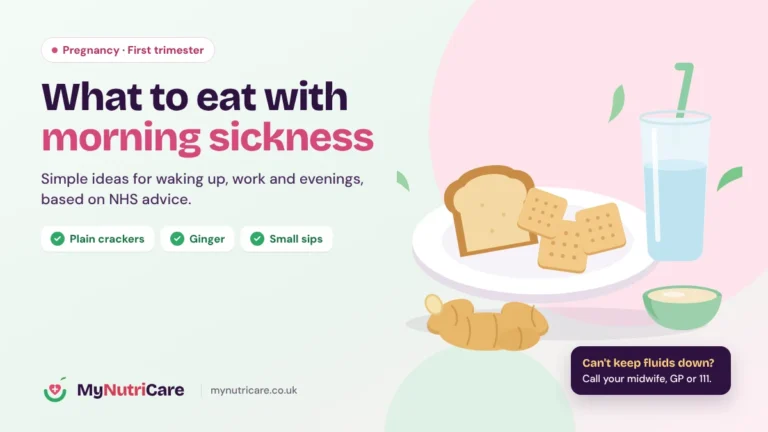
In the first trimester and struggling to eat at all? Start with our list of foods that help with morning sickness; First Trimester Nutrition then focuses on foods that sit well with sickness. Later in pregnancy, our guide on how to write a birth plan helps you prepare for labour. See all pregnancy courses, or use our guide to choosing the right course.
Related guides
- Preconception checklist (UK): what to sort before you start trying.
- Writing your birth plan: every section of the NHS checklist explained.
- When to start weaning: the next food milestone, from around 6 months.
Questions people ask
Can I eat brie when pregnant?
Only if it is cooked until steaming hot, for example a baked brie or camembert. Cold brie is a mould-ripened soft cheese, which can carry listeria, so the NHS advises against eating it uncooked.
Can I eat mozzarella and feta when pregnant?
Yes, when they are pasteurised, which most in UK supermarkets are. Pasteurised soft cheeses such as mozzarella, feta, halloumi, paneer, ricotta and cream cheese are all safe.
Can I eat smoked salmon when pregnant?
Only if it is cooked until steaming hot, for example stirred into hot pasta. Cold-smoked and cured fish, including smoked salmon and gravlax, can carry listeria.
Can I eat runny eggs when pregnant in the UK?
Yes, if they are hen eggs with the British Lion stamp or produced under the Laid in Britain scheme. Other eggs should be cooked until the white and yolk are solid.
How much coffee can I have when pregnant?
Keep total caffeine under 200mg a day. A mug of instant coffee has about 100mg, so two mugs reach the limit on their own. Tea, cola, energy drinks and chocolate count too.
Can I eat salami or pepperoni when pregnant?
Yes, if it is cooked until steaming hot, such as on a freshly baked pizza. Cold cured meats should not be eaten straight from the pack. You can browse every course and guide on the My Nutri Care home page.
Is sushi safe in pregnancy?
Sushi made with cooked fish, cooked shellfish or vegetables is safe. Avoid sushi and sashimi made with raw fish.
Can I eat tuna when pregnant?
Yes, but no more than 4 medium cans or 2 fresh tuna steaks a week, because tuna contains more mercury than other fish.
Sources
- NHS: Foods to avoid in pregnancy (page last reviewed 15 June 2026)
- NHS: Listeriosis
- NHS: Vitamins, supplements and nutrition in pregnancy
- UK Chief Medical Officers: Low risk drinking guidelines
- Food Standards Agency
This article is general information based on UK public health guidance. It is not medical advice. If you have a health condition, an allergy or questions about your own pregnancy, speak to your midwife, GP or pharmacist.