You do not need a special diet when you are pregnant, and you do not need to eat for two. What helps is knowing what a good day of food actually looks like on the plate. This guide walks through each food group the NHS asks you to cover, then puts it together into one balanced day, with every food chosen to be safe according to our pregnancy food safety checklist.

Last reviewed 12 October 2026 · Checked against NHS guidance · 14 min read
The short answer
A balanced pregnancy day in the UK follows the NHS Eatwell Guide: at least 5 portions of fruit and vegetables, starchy foods (ideally wholegrain) making up just over a third of what you eat, some protein every day, and some dairy or calcium-fortified alternatives. Aim for 2 portions of fish a week, 1 of them oily. You do not need extra food for most of pregnancy; the NHS says you need about 200 extra calories a day only in the last 3 months.
The shape of a balanced day
The NHS uses the same Eatwell Guide in pregnancy as for everyone else, plus rules on safety, fish and supplements. It splits food into five groups by how much of your day each should fill.
Bar widths are an illustration of the Eatwell Guide's shape, not exact NHS percentages.
Two practical points make this easier. First, the NHS says you can aim for balance across a week rather than at every single meal, so one beige dinner is not a failure. Second, the Eatwell Guide also recommends 6 to 8 cups or glasses of fluid a day. If you drink tea or coffee, keep track of your daily caffeine limit.
Food group by food group
Fruit and vegetables: at least 5 portions a day
Fresh, frozen, canned, dried or juiced all count. A portion is 80g of fresh, canned or frozen fruit or veg. A few rules catch people out:
- 30g of dried fruit is one portion. The NHS suggests having it with meals rather than as a snack, to protect your teeth.
- Juice and smoothies count as one portion at most, however much you drink, up to a combined 150ml a day.
- Beans and pulses only count once a day, however many you eat.
- Potatoes do not count, because they are a starchy food. Sweet potatoes, parsnips, swedes and turnips do.
Wash fresh fruit, vegetables and salad thoroughly before eating. Fruit and veg also give you fibre, which the NHS says helps digestion and can help prevent constipation.
Starchy foods: just over a third of what you eat
Bread, potatoes, breakfast cereals, rice, pasta and noodles are an important source of energy, some vitamins and fibre, and they help you feel full. The NHS asks you to choose wholemeal or higher-fibre versions instead of white where you can. Simple swaps: wholemeal bread, brown rice, wholewheat pasta, porridge oats, and leaving the skins on potatoes. If you have chips, the NHS suggests oven chips lower in fat and salt.
Protein: some every day
Protein provides the building blocks for your baby to grow. Good sources are beans, pulses, fish, eggs, meat, poultry and nuts. A few pregnancy-specific points:
- Meat: choose lean cuts, remove the skin from poultry and try not to add extra fat when cooking. Cook poultry, burgers and sausages until steaming hot with no pink meat. Avoid liver and liver products.
- Fish: try to eat 2 portions a week (a portion is around 140g), 1 of which should be oily, such as salmon, sardines or mackerel. Have no more than 2 portions of oily fish a week, and no more than 4 cans or 2 steaks of tuna. Our fish in pregnancy guide covers the full list.
- Eggs: hen eggs with the red British Lion stamp or from the Laid in Britain scheme are safe even runny. Cook other eggs until the white and yolk are solid.
- Nuts: safe unless you are allergic or have been told not to eat them.
Dairy and calcium
Milk, cheese, fromage frais and yoghurt contain calcium and other nutrients you and your baby need. The NHS suggests lower-fat versions where possible, such as semi-skimmed, 1% or skimmed milk, lower-sugar yoghurt and reduced-fat hard cheese. If you prefer dairy alternatives such as soya drinks and yoghurts, choose unsweetened, calcium-fortified versions.
Hard cheeses and pasteurised soft cheeses are safe; the ones that need cooking are explained in our cheese guide.
Foods high in fat, salt and sugar
Butter, crisps, cake and fizzy drinks are high in calories and can contribute to weight gain and tooth decay; too much saturated fat also raises cholesterol. Have them less often and in small amounts, and use unsaturated fats such as vegetable oils instead.
Cut down on salt too, as too much can raise blood pressure. The green, amber and red colour code on food labels is a quick way to compare fat, sugar and salt.
Four nutrients to plan into the week
Cover the food groups and most nutrients look after themselves. These four depend on specific foods turning up regularly.
Iron, with vitamin C alongside
Without enough iron you will probably get very tired and may develop anaemia. Sources include lean meat, green leafy vegetables, dried fruit, nuts, pulses and breakfast cereals with added iron (but not liver).
Iron from plants is absorbed less well than iron from meat, so the NHS suggests a vitamin C food at the same meal (oranges or orange juice, peppers, strawberries, broccoli, Brussels sprouts or potatoes) and no tea or coffee during or after main meals. If your iron is low, your midwife or GP may recommend a supplement.
Calcium for your baby's bones and teeth
- Milk, cheese and yoghurt
- Green leafy vegetables such as rocket, watercress or curly kale
- Tofu and soya drinks with added calcium
- Bread and other foods made with fortified flour
- Fish where you eat the bones, such as tinned sardines and pilchards
Vitamin D from food (plus a supplement)
Some foods contain vitamin D: oily fish, egg yolks, red meat and fortified foods such as some breakfast cereals and fat spreads. Food alone is not enough, which is why the NHS advises a daily 10 microgram supplement, especially from September to March. Do not go above 100 micrograms (4,000 IU) a day.
Fibre and fluids, for constipation
Constipation is common in pregnancy. Wholegrains, potato skins, fruit, vegetables and pulses all add fibre. The NHS advice is to increase fibre gradually and drink plenty of fluids. Aim for 6 to 8 cups or glasses a day: water, lower-fat milk, sugar-free drinks, tea and coffee all count, and juice or smoothies up to 150ml a day in total.
Eating for two: what the NHS actually says
You will probably feel hungrier than usual, but the NHS is clear that you do not need to eat for two, even if you are expecting twins or triplets.
The exception is the last 3 months. The NHS says you need about 200 extra calories a day in the third trimester, which it describes as roughly 2 slices of wholemeal toast with margarine. That is a snack, not an extra meal.
One habit the NHS singles out: try to have a healthy breakfast every day, because it can help you avoid snacking on foods high in fat and sugar later.
How much weight gain is normal?
The NHS says most women gain between 10kg and 12.5kg (22lb to 28lb) in pregnancy, mostly after week 20. Pregnancy is not the time to diet, as it may harm your baby's health. Eat healthily and keep up your normal activity unless advised otherwise. If your BMI is over 30 or below 18.5, your midwife or GP may have specific advice. For a closer look, see our guide: How to Write a Birth Plan in the UK.
If you are diagnosed with gestational diabetes
Gestational diabetes is high blood sugar that develops in pregnancy and usually goes away after the birth. Diet changes and activity can help, sometimes alongside tablets or insulin. The day below is general advice; if you are diagnosed, follow your team's advice.
One example day: three meals and two snacks
One balanced day built from NHS advice, using foods that are safe in pregnancy as listed. It is an example, not a prescription; portions depend on your appetite and stage of pregnancy.
Porridge with banana and apricots
BreakfastPorridge oats made with semi-skimmed milk, topped with a sliced banana and a small handful (30g) of chopped ready-to-eat dried apricots. A small glass (150ml) of orange juice, then water.
Safe as it is. Dried fruit is eaten with the meal, as the NHS suggests, and the juice is your 150ml for the day. Save your tea or coffee for between meals.
Yoghurt and fruit
Mid-morningPlain or lower-sugar fruit yoghurt with a handful of berries or a chopped fresh fruit.
Choose a pasteurised yoghurt; check the label.
Jacket potato, beans and cheddar
LunchA jacket potato with the skin on, filled with baked beans and a little grated cheddar, plus a side salad of washed leaves, tomato and cucumber.
Cheddar is a hard cheese, safe in pregnancy. Wash the salad well.
Veg sticks and malt loaf
AfternoonCarrot, celery and cucumber sticks with a small slice of malt loaf. In the third trimester, this is a good place for the extra 2 slices of wholemeal toast.
Both ideas come from the NHS list of healthy pregnancy snacks.
Baked salmon, new potatoes and greens
DinnerA fillet of salmon (around 140g) baked until cooked through, new potatoes in their skins, broccoli and a handful of spinach wilted in at the end.
This is your oily fish portion for the week, and a vitamin D source. Broccoli and potatoes add vitamin C alongside the iron in the spinach. Fresh salmon cooked through is safe; cold-smoked salmon would need cooking until steaming hot.
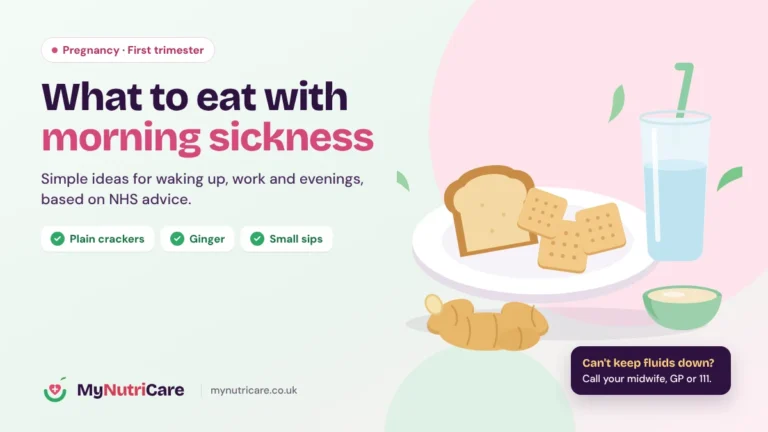
Across the week, add one more fish meal, such as white fish or prawns cooked until steaming hot, and vary protein between eggs, chicken, lean meat and pulses. If you are struggling with nausea in early pregnancy, our guide to foods for morning sickness is a gentler place to start.
Build a balanced plate
Pick one item from each group for a meal, then check it. You get a quick balance check plus any pregnancy safety notes.
1. Starchy food
2. Protein
3. Vegetables or fruit
4. Dairy or alternative
A quick check of one meal only; it resets when you leave. Full trimester-by-trimester meal planners and shopping lists are in the Complete Pregnancy Nutrition Course.
Healthy snacks the NHS suggests
If you get hungry between meals, the NHS suggests avoiding snacks high in fat or sugar and choosing from options like these:
Two safety points on that list: lean ham should be kept chilled and eaten before its use-by date, and tinned tuna counts towards your limit of 4 cans a week.
Eating well on a budget
The NHS is clear that you do not need to spend lots of money or follow a special diet in pregnancy, just a balance of the right types of food. A few ways the official guidance makes that easier:
- Frozen and tinned count. Frozen and canned fruit and vegetables count towards your 5 a day just like fresh. Choose ones without added salt or sugar.
- Pulses do double duty. Beans and lentils give protein, fibre and iron, and count once a day towards your 5 a day.
- Tinned oily fish. Sardines and pilchards are oily fish, and their edible bones add calcium.
- Healthy Start. If you are more than 10 weeks pregnant and get certain benefits, or you are pregnant and under 18, you may be able to get a Healthy Start card. It buys plain cow's milk, fruit and vegetables (fresh, frozen or tinned) and pulses, and you can collect Healthy Start vitamins.
Kitchen hygiene for a pregnancy meal plan
Safe foods are half the job. The NHS adds these kitchen habits:
- Wash fruit, vegetables and salad to remove soil, which can carry toxoplasma.
- Wash your hands, surfaces and utensils after handling raw food.
- Store raw food separately from ready-to-eat food, and use a separate board and knife for raw meat.
- Heat ready meals until they are steaming hot all the way through.
- Do not eat food after its use-by date, even if it looks and smells fine.
For the full list of what to avoid, see our pregnancy food safety checklist.
Vegetarian and vegan in pregnancy
The NHS says a varied and balanced vegetarian diet should provide enough nutrients for you and your baby, but that iron and vitamin B12 can be harder to get enough of. If you are vegan, or follow a restricted diet for medical or religious reasons, speak to your midwife or GP; you can ask to be referred to a dietitian.
The Eatwell groups still work. Pulses, eggs and nuts cover protein; unsweetened, calcium-fortified soya drinks and yoghurts, tofu and leafy greens cover calcium; pair plant iron with a vitamin C food. Three more points from NHS vegan guidance:
- Vitamin B12: vegan sources are limited to fortified foods such as cereals, unsweetened soya drinks and yeast extract, so a supplement may be needed.
- Iodine: good sources are cows' milk and dairy, eggs, sea fish and shellfish. Some soya and oat drinks are fortified with iodine. If you eat none of those foods, ask a health professional before taking a supplement.
- Vitamin D: if you buy fortified foods, check the label to make sure the vitamin D is not from an animal source.
Supplements still matter, whatever you eat
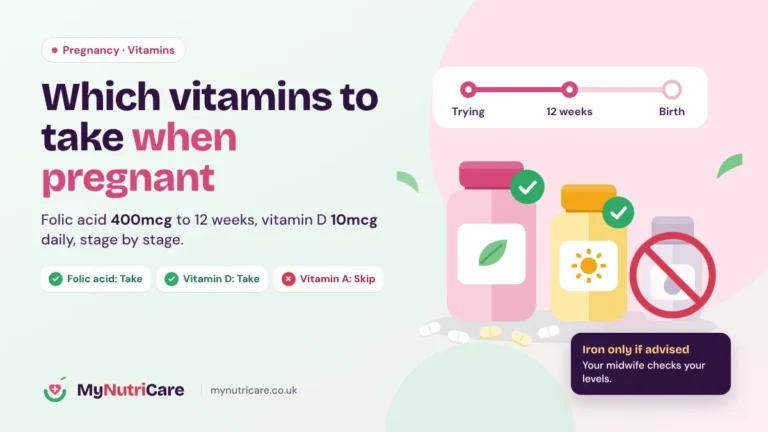
Even a perfect plate does not replace two NHS supplements. Take 400 micrograms of folic acid a day from before pregnancy until 12 weeks, and 10 micrograms of vitamin D a day. Do not take cod liver oil or any supplement containing vitamin A (retinol). Our pregnancy vitamins guide explains what to take and when. For a closer look, see our guide: Morning Sickness Foods.
Speak to your midwife or GP if
- you are vegan, or follow a restricted diet for health, cultural or religious reasons
- sickness means you are struggling to keep food or fluids down
- you have diabetes, a food allergy, or have been told your iron is low
- you are worried about your weight or how much you are eating
They can refer you to a dietitian for a plan that fits you.
Want more than one example day?
Planning every day, as your appetite and needs change, is where our courses come in.
Complete Pregnancy Nutrition
Three meal planners, one for each trimester, with matching shopping lists, a fridge-door safe and avoid list and a supplement tracker.
Pregnancy Nutrition for Beginners
The basics of eating well in pregnancy in about an hour, with a pregnancy plate, daily checklist and starter shopping list.
Related guides
- Folic acid: 400 micrograms or 5mg?: who needs the higher dose.
- UK birth plan guide: what to put in it and when to write it.
- Getting ready to conceive: the NHS preconception checklist.
Questions people ask
What should a pregnant woman eat in a day?
At least 5 portions of fruit and vegetables, wholegrain starchy foods making up just over a third of your food, some protein such as beans, eggs, fish or lean meat, and some dairy or fortified alternatives, plus 6 to 8 glasses of fluid.
Do I need to eat more when pregnant?
Not for most of pregnancy. The NHS says you do not need to eat for two, even with twins or triplets. In the last 3 months you need about 200 extra calories a day, roughly 2 slices of wholemeal toast with margarine.
What is a good breakfast when pregnant?
Something with wholegrain starch, fruit and dairy, such as porridge made with milk and topped with fruit, or wholemeal toast with British Lion eggs. The NHS says a healthy breakfast every day can help you avoid snacking on foods high in fat and sugar.
What are healthy snacks during pregnancy?
The NHS suggests small sandwiches or pitta with cheese or tuna, vegetable sticks, yoghurt with fruit, dried apricots or prunes, bean soups, porridge with milk, fresh fruit, and beans on toast.
How much fish should I eat when pregnant?
Try to eat 2 portions of fish a week, about 140g each, with 1 of them oily, such as salmon, sardines or mackerel. Have no more than 2 portions of oily fish and no more than 4 cans or 2 steaks of tuna a week.
How much weight should I gain when pregnant?
Most women gain between 10kg and 12.5kg (22lb to 28lb), mostly after week 20, according to the NHS. Do not diet in pregnancy; eat healthily, stay active, and ask your midwife or GP if you are worried.
Can I eat a vegetarian or vegan diet when pregnant?
Yes. The NHS says a varied, balanced vegetarian diet should provide enough nutrients, but iron and vitamin B12 can be harder to get. If you are vegan, speak to your midwife or GP, who can refer you to a dietitian.
Sources
- NHS: Have a healthy diet in pregnancy
- NHS Best Start in Life: Healthy eating in pregnancy (updated 12 June 2026)
- NHS: The Eatwell Guide
- NHS: 5 A Day, what counts? (reviewed 9 June 2026)
- NHS: Foods to avoid in pregnancy (reviewed 15 June 2026)
- NHS: Vitamins, supplements and nutrition in pregnancy
- NHS: Weight gain in pregnancy
- NHS: Gestational diabetes
- NHS: Constipation
- NHS: The vegan diet (reviewed 5 June 2026)
- NHS: Iodine
- NHS Healthy Start: Get help to buy food and milk
This article is general information based on UK public health guidance. It is not medical advice. If you have a health condition, an allergy or questions about your own pregnancy, speak to your midwife, GP or pharmacist.