Dry toast at 6am, crackers in your desk drawer, a plain jacket potato because nothing else smells bearable. Food ideas for each part of a queasy day, built on NHS advice, checked against the food safety rules, and clear about when to call your midwife.

Last reviewed 12 October 2026 · Checked against NHS guidance · 12 min read
The short answer
The NHS suggests small, frequent meals of plain, starchy, low-fat foods such as bread, rice, crackers and pasta, with dry toast or a plain biscuit first thing in the morning. Sip fluids little and often, choose cold food if the smell of hot meals sets you off, avoid your trigger smells and rest when you can. There is some evidence that foods or drinks containing ginger help. If you cannot keep food or fluids down for 24 hours, call your midwife, GP or 111.
Morning sickness is very common: the NHS says about 8 in 10 pregnant women have nausea, vomiting or both, and it can strike at any time of day or night, not just the morning. It usually starts around weeks 4 to 7 and, for most people, clears up by weeks 16 to 20, although for some it lasts longer. This guide is about getting through those weeks with food you can actually face, without breaking the rules in our pregnancy food safety checklist when the only thing you fancy is a cold plate from the deli counter.
What the NHS suggests, and how strong the evidence is
The NHS pages on morning sickness give a short list of self-help steps. None is a cure, and not every tip works for everyone.
- Small, frequent mealsPlain, starchy, low-fat foods such as bread, rice, crackers and pasta. NHS Best Start in Life suggests around six small meals a day.
- Something dry before you get upDry toast or a plain biscuit in the morning. Keeping a snack by your bed makes this easier.
- Fluids, little and oftenDrink plenty of fluids such as water. The NHS says sipping little and often may help prevent vomiting.
- Cold food over hotEat cold foods rather than hot ones if the smell of hot meals makes you feel sick.
- Avoid your triggersSteer clear of the foods and smells that make you feel sick. Everyone's list is different.
- RestTiredness can make nausea worse, so rest when you can.
- GingerFoods or drinks containing ginger, such as ginger tea, ginger biscuits or crystallised ginger.
NHS: "some evidence" - AcupressurePressure on your wrist, using a special band or bracelet or by pressing with your fingers, may help relieve symptoms.
NHS: "some evidence"
Two details that are easy to miss. First, the ginger advice is about foods and drinks: the NHS says to check with your pharmacist before taking ginger supplements in pregnancy. Second, if your sickness is severe and these steps do not help, your GP can prescribe anti-sickness medicine that is safe to take in pregnancy (more on treatment below). You do not have to just put up with it.
What can I face right now?
Pick the moment you are in. You will get 4 simple ideas that follow NHS advice and the pregnancy food safety rules.
Can't keep food or fluids down for 24 hours, very dark pee or none for 8 hours, or feeling faint? See the signs to call your midwife, GP or 111.
A quick idea finder only, with nothing saved. The First Trimester Nutrition course has the full set of sickness-friendly meal ideas and helps you prepare for your booking appointment.
Food ideas through a queasy day
The NHS advice is the same all day; how you apply it changes between your bedside, your desk and your kitchen.
First thing in the morning
NHS Best Start in Life notes sickness is often worst when you wake up. Put a plain biscuit, a few crackers or a ginger biscuit by the bed the night before, and eat it before you get up. Dry toast works the same way if someone can bring it to you.
Once you are up, move on to something small and starchy. Plain toast, or a small bowl of unsweetened cereal or porridge with milk (both on the NHS snack list), are gentle options.
At work or on the move
Small and frequent is hardest to do when you are out, so pack for it. Keep crackers, plain biscuits or crystallised ginger in your bag or desk drawer and a water bottle to sip from. A small sandwich or pitta with grated cheese, lean ham or mashed tuna and some salad (one of the NHS healthy snack ideas) is an easy lunch.
If the canteen or microwave smells set you off, a cold lunch is a sensible choice. Pre-packed sandwiches need to stay chilled and be eaten before their use-by date, so keep them in the work fridge rather than your bag all morning.
When only "beige" food stays down
This is the NHS advice in action, not a failure. Bland, starchy foods are exactly what NHS pages suggest: jacket potatoes, plain pasta, rice, plain biscuits, dry bread or toast. Small portions eaten often usually sit better than one big plate.
To get a bit more in without much effort, the NHS snack list includes baked beans on toast, a small baked potato and unsweetened cereal or porridge with milk. Eggs are fine too: British Lion or Laid in Britain hen eggs can even be eaten runny.
When you can't face water
The NHS suggests sipping fluids little and often, and NHS Best Start in Life suggests sucking ice cubes. If plain water is the problem, other drinks still count: ginger tea and ginger ale are among the ginger options Best Start in Life lists, and milky drinks are on the NHS healthy snack list.
Herbal teas are fine in moderation: the NHS says to avoid more than 4 cups of herbal tea a day and to avoid herbal teas containing liquorice root. If you lean on tea, coffee or cola, keep an eye on the 200mg caffeine limit. Fluids are the one thing you cannot go without for long. Not keeping fluids down for 24 hours is a reason to call for help, not to keep trying.
Evenings and cooking smells
Tiredness can make nausea worse, and evening is when many people are most tired and someone is cooking. The NHS tips that help most here are cold food rather than hot, and avoiding the smells that trigger you. A cold pasta salad, a sandwich, or yoghurt and fruit can replace a hot dinner.
If a hot meal is fine, keep it plain and small, such as plain pasta or a jacket potato, then rest.
Cold cravings and the pregnancy food safety rules
Because cold food is one of the NHS suggestions, many people end up craving cold deli food, soft cheese or smoked salmon. Some of these are fine straight from the fridge; some need cooking first. The NHS foods to avoid page, last reviewed on 15 June 2026, sets out the rules.
Ginger biscuits and ginger tea sit happily inside these rules. Ginger supplements are different: check with your pharmacist first.
Is my baby getting enough if I can only eat toast?
This is the worry behind most searches, so here is what the NHS says. Morning sickness does not put your baby at any increased risk. NHS Best Start in Life puts it this way: "There is no evidence that nausea and vomiting has a harmful effect on your baby."
The exception is severe sickness. If you are being sick so much that you cannot keep food down, you may not get enough nutrients from your diet. That is hyperemesis gravidarum, and it needs treatment rather than better snack choices (see the signs below). For a closer look, see our guide: What to Eat in a Day When Pregnant.
Keep taking folic acid, and vitamin D
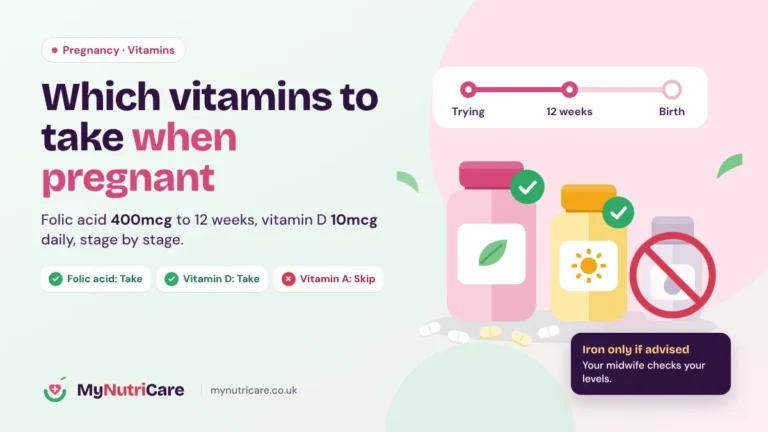
The NHS advises 400 micrograms of folic acid every day until you are 12 weeks pregnant, and 10 micrograms of vitamin D a day. Avoid cod liver oil and any supplement containing vitamin A (retinol). You may be able to get free vitamins through the Healthy Start scheme. Our pregnancy vitamins guide explains who needs what.
As the sickness eases, usually by weeks 16 to 20, you can widen what you eat again. You do not need to "eat for 2", the NHS says. Our pregnancy meal plan shows what a balanced day can look like once food feels normal again.
Vitamins and iron tablets when you feel sick
Swallowing tablets on a queasy stomach is a common struggle. The NHS pregnancy vitamins page does not give specific advice on taking supplements while you are being sick, so here is what the NHS does say.
- Folic acid and vitamin D are the supplements the NHS pregnancy vitamins page advises (doses above). If you keep bringing them back up, tell your midwife rather than quietly stopping.
- Iron tablets are for low iron. The NHS says a GP or midwife will advise you to take them if the iron level in your blood becomes low.
- Iron can make you feel sick. The NHS lists feeling sick, tummy pain, heartburn, constipation or diarrhoea and darker poo as possible side effects of iron tablets. It suggests taking them with or soon after food to reduce the chance of side effects, and says it is important to keep taking them.
If iron tablets seem to be making your sickness much worse, speak to your midwife or GP before changing how you take them. The NHS says untreated iron deficiency anaemia in pregnancy can raise the risk of complications before and after birth, so do not simply stop.
When to call your midwife, GP or 111
The NHS says to call your midwife, GP or 111 if you are vomiting and:
- your pee is very dark, or you have not peed for more than 8 hours
- you cannot keep food or fluids down for 24 hours
- you feel very weak, dizzy or faint when standing up
- you have pain in your tummy
- you have a high temperature
- you vomit blood
- you have lost weight
Being sick frequently and cannot keep food down? The NHS page on severe vomiting in pregnancy says to tell your midwife or doctor, or contact the hospital, as soon as possible. Early help can prevent dehydration and weight loss.
Signs of dehydration, according to the NHS, include feeling thirsty, tired, dizzy or lightheaded, not peeing very much, and dark yellow, strong-smelling pee. Unlike ordinary morning sickness, hyperemesis gravidarum may not get better by 16 to 20 weeks.
The NHS also notes that a urinary tract infection can sometimes cause nausea and vomiting.
Medicine, hospital care and support
Food tips are the first step, not the only one. Here is what the NHS says can happen next if they are not enough.
Anti-sickness medicine from your GP
If your sickness is severe and not improving, your GP may recommend a short course of an anti-sickness medicine (an antiemetic) that is safe to use in pregnancy. Antihistamines are often used, and they are usually given as tablets. For hyperemesis gravidarum, a doctor may suggest an injection or a suppository instead, and the NHS says anti-sickness medicines, steroids or a combination can be used, including in the first 12 weeks. You may need to try more than one before you find what works.
Hyperemesis gravidarum and hospital treatment
Hyperemesis gravidarum affects an estimated 1 to 3 in 100 pregnant women. It means severe nausea and vomiting, often many times a day, with dehydration and weight loss, and it may not fully clear until the baby is born. If symptoms cannot be controlled at home, you may be admitted to hospital for fluids through a drip and, in severe cases, anti-sickness medicine by injection.
The NHS says hyperemesis is unlikely to harm your baby if it is treated effectively, but losing a lot of weight in pregnancy raises the risk of a low birthweight baby. That is why weight loss is on the list of signs to call about. If you had hyperemesis before, you are likely to have it again: the NHS suggests planning ahead, such as talking to your doctor about starting medicine early.
How you feel matters too
The NHS recognises that severe sickness can leave you anxious, isolated, depressed or overwhelmed. Talk to your midwife or doctor, and to family and friends. The UK charity Pregnancy Sickness Support, which NHS pages signpost, has coping tips for you and your partner and can put you in touch with someone who has had hyperemesis themselves.
Why some people get it worse
Hormonal changes in the first 12 weeks are thought to be a probable cause. The NHS lists several things that make sickness more likely:
- carrying twins or more
- severe sickness in a previous pregnancy
- a tendency to motion sickness, or a history of migraines
- morning sickness in your family
- feeling sick when taking contraception that contains oestrogen
- a first pregnancy
- a BMI of 30 or more
If any of these apply, mention sickness to your midwife early, before it gets bad, so you know who to call and what can help.
Sickness-friendly meals for the first 12 weeks
The First Trimester Nutrition course (Focused, 2 hours, £14.99) gives you the full set of sickness-friendly meal ideas, what to eat when nausea eases, and how to prepare for your booking appointment. For a closer look, see our guide: Which Cheeses Can You Eat When Pregnant.
See the courseComplete Pregnancy Nutrition (£24.99)Every food rule is in our pregnancy food safety checklist, or browse all pregnancy courses.
Related guides
- Folic acid before and in early pregnancy: what to do if you missed it.
- Which vitamins to take in pregnancy: the NHS basics by stage.
- Planning your birth preferences: a UK birth plan, section by section.
Questions people ask
What foods help morning sickness?
The NHS suggests small, frequent meals of plain, starchy, low-fat foods such as bread, rice, crackers and pasta, plus dry toast or a plain biscuit in the morning. There is some evidence that foods or drinks containing ginger may help reduce nausea and vomiting.
What should I eat first thing in the morning with morning sickness?
Try dry toast or a plain biscuit before you get up. Keeping a snack by your bed makes this easier, as sickness is often worst when you wake up.
Does ginger help morning sickness?
The NHS says there is some evidence that ginger may help reduce nausea and vomiting, in foods or drinks such as ginger tea or ginger biscuits. Check with your pharmacist before taking ginger supplements in pregnancy.
Can morning sickness harm my baby?
The NHS says morning sickness does not put your baby at any increased risk. Severe sickness (hyperemesis gravidarum) can mean you do not get enough nutrients, so it needs treatment from your midwife or doctor.
When does morning sickness start and stop?
It usually starts around weeks 4 to 7 of pregnancy and, for most people, clears up by weeks 16 to 20, although it can last longer. Hyperemesis gravidarum may not improve by then.
Can I get medicine for morning sickness?
Yes. If your sickness is severe and not improving, your GP may recommend a short course of anti-sickness medicine that is safe to use in pregnancy, usually as tablets. For hyperemesis gravidarum, injections, suppositories, steroids or hospital treatment with fluids through a drip may be needed.
When should I worry about being sick in pregnancy?
Call your midwife, GP or 111 if you are vomiting and cannot keep food or fluids down for 24 hours, your pee is very dark or you have not peed for more than 8 hours, you feel very weak, dizzy or faint when standing, you have tummy pain or a high temperature, you vomit blood, or you have lost weight. You can browse every course and guide on the My Nutri Care home page.
Sources
- NHS: Vomiting and morning sickness (page last reviewed 17 April 2024)
- NHS: Severe vomiting in pregnancy (hyperemesis gravidarum) (page last reviewed 11 January 2023)
- NHS Best Start in Life: Morning sickness
- NHS: Foods to avoid in pregnancy (page last reviewed 15 June 2026)
- NHS: Have a healthy diet in pregnancy
- NHS: Vitamins, supplements and nutrition in pregnancy
- NHS: Iron deficiency anaemia, treatment
This article is general information based on UK public health guidance. It is not medical advice. If you have a health condition, an allergy or questions about your own pregnancy, speak to your midwife, GP or pharmacist.