Losing words mid-sentence, walking into a room and forgetting why, rereading the same email three times. If this has crept in during your 40s or 50s, you are not imagining it. Here is what the NHS says about menopause brain fog, how to tell when it is worth a GP visit, and practical ways to protect your memory and focus.

Last reviewed 18 October 2026 · Checked against NHS guidance · 13 min read
The short answer
Yes, it is a recognised symptom. The NHS lists problems with memory or concentration among the common symptoms of perimenopause and menopause, under the heading "mood changes, poor memory and brain fog", and says these symptoms can feel worse when you are not sleeping well and feel very tired. Memory problems do not necessarily mean dementia, but see a GP if they are affecting your day-to-day life or you are worried. What helps most is a mix of practical habits (writing things down, one task at a time, steady routines), better sleep, and treating the symptoms that keep you awake, such as night sweats.
Brain fog is one of the symptoms covered in our full UK list of menopause symptoms and what helps each one. This guide goes deeper on that one question: what is going on with your memory and focus, when to get it checked, and what you can do about it today. Every health fact below comes from the NHS, NICE or another official UK body.
What menopause brain fog feels like
"Brain fog" is not a medical diagnosis. It is the everyday name for the memory and concentration problems the NHS describes. Many people say it feels less like forgetting and more like their thinking has slowed down or gone cloudy. In daily life it can look like this:
It often arrives alongside irregular periods, hot flushes, broken sleep or low mood, a clue that it may be linked to perimenopause or menopause. The NHS explains that perimenopause is when your periods become irregular, and menopause is defined as not having a period for 12 months. It usually affects women between 45 and 55, but it can happen earlier. Our guide to the early signs of perimenopause covers the other changes to look out for.
How common is menopause brain fog?
Here is what official UK sources say, and where they are honest that the picture is incomplete:
What we do not have is an NHS or NICE figure for exactly how many people get brain fog. The NICE menopause guideline (NG23, updated November 2024) lists hot flushes and sweats, mood effects such as depressive symptoms, joint and muscle pain, genitourinary symptoms and low sexual desire as menopause-associated symptoms, but it does not single out memory or concentration in that list. Research is still developing, so treat any precise percentage you see online with care.
Is it dementia? What the NHS says, and when to see a GP
This is often the real worry behind a search for "menopause memory loss", especially if a parent had dementia. The NHS is clear on a few points worth holding on to.
First, the NHS says memory problems do not necessarily mean you have dementia. Across its memory loss and dementia pages it names a range of other causes:
Common, treatable causes (NHS)
- Stress
- Anxiety or depression
- Sleeping problems (insomnia)
Other causes the NHS lists
- A natural part of getting older
- An underactive thyroid (hypothyroidism)
- Side effects of some medicines
- Sudden confusion (delirium) caused by an infection or other medical condition
- Occasionally, something more serious, such as dementia
Several of these overlap with menopause. The NHS lists menopause among the conditions that can cause insomnia, and lists sleep problems, anxiety and low mood as menopause symptoms in their own right, so it makes sense to look at the whole picture.
Second, the NHS says "dementia is not a natural part of ageing" and advises talking to a GP sooner rather than later if you are worried about your memory. Getting checked is not an overreaction.
See a GP if...
- memory problems are affecting your day-to-day life
- you are worried about your memory, or think you may have dementia
- you have felt tired for a few weeks without knowing why, or tiredness is affecting your daily life
- you think you have menopause symptoms and want to know your options
The NHS advises against self-diagnosing memory loss. A GP will ask about your symptoms and general health, may examine you and arrange blood and urine tests, and may ask you to do a short memory test. If needed, they can refer you to a memory specialist.
What makes menopause brain fog worse
You cannot control your hormones, but several things that thicken the fog are within reach. These are the ones the NHS links to memory, concentration or menopause symptoms:
The NHS says memory and concentration symptoms may feel worse if you have sleep problems and feel very tired. Insomnia itself can make it difficult to concentrate during the day. Adults generally need 7 to 9 hours of sleep.
The NHS notes that sleep problems may be worse if you also have night sweats. Our guide to hot flushes and night sweats covers what helps.
Mood swings, low mood and anxiety are common in menopause, and the NHS names stress, anxiety and depression among the common causes of memory problems. See our guide to menopause mood changes and anxiety.
The NHS says smoking can make menopause symptoms worse and advises trying not to drink more than the recommended alcohol limit. It also advises avoiding alcohol, tea and coffee for at least 6 hours before bed to help you sleep.
The NHS lists hormonal changes, including the menopause, as a cause of tiredness, alongside conditions such as iron deficiency anaemia and thyroid problems. A GP can check these with blood tests if needed.
This guide explains why your focus slips. Menopause Brain Fog and Memory gives you the tools to do something about it: memory and focus techniques for home and work, a brain fog tracker to spot your patterns, and clear guidance on when to talk to your GP.
5 focus habits that help on foggy days
No habit switches brain fog off, and the NHS does not set out specific memory techniques for menopause. These are practical, low-effort ways to take pressure off your memory, so a foggy day causes fewer problems.
1. Write it down, in one place
One notebook or notes app beats sticky notes scattered across the house. Write things down the moment you think of them, and try a short "brain dump" before bed so tomorrow's list is not running through your head.
2. One task at a time
Switching between tasks costs more when concentration is stretched. Close extra tabs, put your phone face down and finish one job before starting the next. The NHS stress tips make a similar point: prioritise the tasks that will make a real difference.
3. A home for everything
Give keys, glasses, purse and phone one fixed spot, such as a bowl by the door, so you never need to remember where you left them.
4. Let reminders do the remembering
Put every appointment into one calendar with an alert, set repeating reminders for bills or medicines, and check the calendar at the same time each morning. The more that happens on autopilot, the less you hold in your head.
5. Protect your sleep
Because the NHS links worse memory and concentration with poor sleep, this habit has the biggest knock-on effect. NHS sleep advice includes:
- Go to bed and wake up at around the same time each day.
- Relax for at least 1 hour before bed, and avoid screens such as smartphones right before you go to bed.
- Avoid alcohol, tea and coffee for at least 6 hours before bed, and avoid exercise in the 4 hours before bed.
- If night sweats wake you, keep the bedroom cool, wear lightweight clothing and keep a fan or a cold drink nearby.
Two more that support the five
- Keep moving. The NHS advises regular exercise in menopause, especially weight-bearing exercise. The adult guideline is at least 150 minutes of moderate activity a week, plus strengthening on at least 2 days.
- Lower the pressure. The NHS suggests relaxing activities such as yoga, tai chi or meditation, and talking to other people going through the same thing.
Brain fog day check
Tick the moments that happened today and tell us how you slept. You will get quick feedback and two practical tips. Nothing is saved.
Which of these happened today?Tick as many as apply.
How did you sleep last night?
Is this getting in the way of everyday life, at home or at work?
Tick what happened today
Your feedback and two tips will appear here as you go.
A quick reflection tool, not a diagnosis or a memory test. Worried about your memory? Speak to your GP.
Brain fog at work
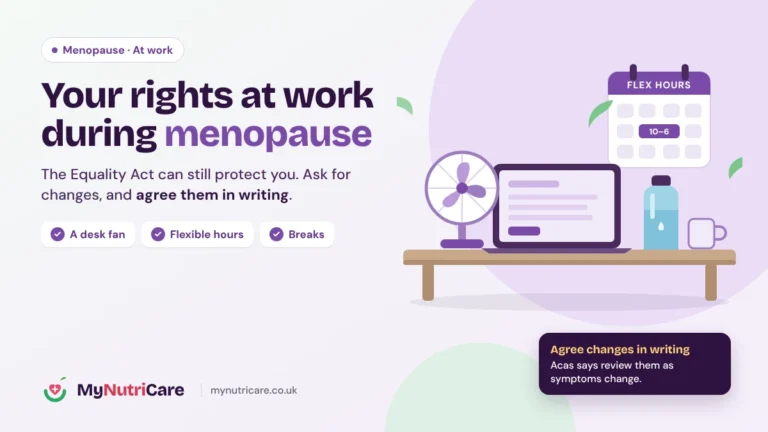
Work is often where brain fog shows up first. The Equality and Human Rights Commission's guidance for employers cites 2023 CIPD research: of women negatively affected at work by menopause symptoms, 79% said they were less able to concentrate.
Acas, the UK workplace advice service, says employers should hold early and regular conversations to work out what changes would help, and should be prepared to make changes so people can keep working. It suggests checking there is somewhere suitable to rest, such as a quiet room, reviewing policies such as flexible working, allowing time for menopause-related medical appointments, and considering whether performance issues may be linked to symptoms. The EHRC adds that if menopause symptoms have a long-term and substantial impact on your ability to carry out normal day-to-day activities, they could be considered a disability under equality law.
Practical things you could ask for, or simply start doing, include:
- Asking for agendas before meetings and a short written summary of actions afterwards.
- Blocking out quiet, uninterrupted time for work that needs deep focus.
- Doing your most demanding tasks at the time of day you feel sharpest.
Our guide to menopause at work in the UK explains your rights and how to start the conversation with your manager. If you want the words ready to go, Menopause at Work (£17.99) includes an adjustments request letter, a symptom diary and a manager conversation script.
Treatment: what HRT, CBT and other options can and cannot do
Precision matters here, because a lot of online content promises more than the evidence supports.
HRT
The NHS says HRT is effective at relieving most perimenopause and menopause symptoms, such as hot flushes, night sweats, sleep problems, anxiety and low mood. Memory and concentration are not named in that list, and NICE makes no specific recommendation on HRT for brain fog. Because the NHS links memory symptoms with poor sleep and tiredness, it is reasonable to ask your GP whether treating night sweats, sleep problems or low mood could help. Our plain-English guide to HRT in the UK covers the types, benefits and risks.
HRT and dementia: exactly what the guidance says
- NICE (NG23, 2024): "Do not offer combined or oestrogen-only HRT for the purpose of dementia prevention."
- NHS: "It's not known whether HRT reduces the risk of dementia." More research is being done on how HRT affects conditions such as dementia.
- NICE notes there is relatively little evidence on dementia compared with other health outcomes, and lists "What are the effects of HRT use on the risk of dementia?" as a question for further research.
In short: HRT is a treatment for menopause symptoms, not a way to protect against dementia. Whether it suits you is a decision to make with your GP, based on your own symptoms and health.
CBT (cognitive behavioural therapy)
NICE recommends considering menopause-specific CBT as an option for hot flushes and night sweats, for sleep problems such as waking in the night, and CBT for depressive symptoms linked to menopause. It can be used alongside HRT or instead of it. NICE does not recommend CBT for brain fog itself, but it may ease sleep and mood problems that make fog worse. Ask your GP about access.
Other options
- Antidepressants: the NHS says you may be offered these if you have low mood, depression or anxiety caused by perimenopause or menopause. NICE adds that SSRIs and SNRIs have not been shown to help low mood in menopause if depression has not been diagnosed.
- Herbal remedies and supplements: the NHS says there is very little evidence to show how well remedies such as red clover and black cohosh work or how safe they are. Speak to a doctor before taking herbal supplements or complementary medicines, and be wary of products sold as "brain boosters".
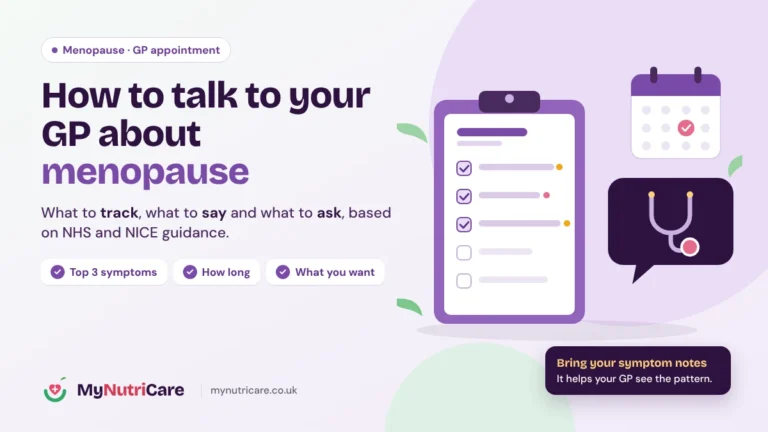
Getting the most from your GP visit
Appointments are short, and brain fog makes it harder to remember what you wanted to say. Before you go:
- Note real examples. Two or three specific moments say more than "my memory is bad".
- Note other symptoms: periods, hot flushes, night sweats, sleep and mood.
- List your medicines, including over-the-counter ones: the NHS lists medicine side effects as one cause of memory problems.
- Say how it affects your daily life, at work and at home.
- Consider bringing someone who can describe the changes, as the NHS suggests.
Our guide to preparing for a menopause GP appointment walks through what to say and what to ask.
Want a plan, not just tips?
This article explains what is happening and what helps. Our courses give you the tools to put it into practice week by week. They support your conversations with your GP; they are not a treatment.
Menopause Brain Fog and Memory
Memory and focus tools for home and work, a brain fog tracker to spot your patterns over the weeks, and clear guidance on when to talk to your GP.
Sleep and Menopause
If broken nights feed your fog: a night symptom diary, a bedroom cooling checklist and a calm back-to-sleep audio.
Complete Menopause Guide
Every stage in one place, with a symptom tracker, a GP appointment summary and who to ask for help.
Full refund within 14 days if you have completed less than 20% of the course and no certificate has been issued.
Related guides
- Menopause symptoms: the full UK list: every symptom and what helps each one.
- Hot flushes and night sweats: cooling tips that protect your sleep.
- Menopause mood changes and anxiety: what is normal and where to get support.
- HRT explained: types, benefits and risks in plain English.
Common questions about menopause brain fog
Is brain fog a real symptom of menopause?
Yes. The NHS lists problems with memory or concentration among the symptoms of perimenopause and menopause, under the heading "mood changes, poor memory and brain fog".
Can perimenopause cause memory loss?
The NHS lists memory problems among the common symptoms of menopause and perimenopause, alongside hot flushes, low mood and sleep problems. If memory problems are affecting your day-to-day life, see a GP to check for other causes.
How do I know if it is brain fog or dementia?
You cannot tell on your own, and the NHS advises against self-diagnosing. Memory problems do not necessarily mean dementia: stress, anxiety, depression, sleep problems, an underactive thyroid and medicine side effects can all affect memory. See a GP if you are worried or your memory is affecting daily life.
Does HRT help menopause brain fog?
The NHS says HRT relieves most menopause symptoms, such as hot flushes, night sweats, sleep problems, anxiety and low mood, but it does not list memory or concentration, and NICE makes no specific recommendation on HRT for brain fog. NICE says not to offer HRT for dementia prevention.
How long does menopause brain fog last?
There is no NHS figure for brain fog on its own. The NHS says menopause symptoms usually last 7 to 9 years, sometimes longer, and often change over time.
Can poor sleep make menopause brain fog worse?
Yes. The NHS says memory and concentration symptoms may feel worse with sleep problems and tiredness, and that sleep problems may be worse if you also have night sweats.
What can I do if brain fog is affecting my work?
Talk to your manager or occupational health. Acas says employers should hold early and regular conversations about what changes could help, and be prepared to make them. Written meeting notes, quiet focus time and flexible working are worth discussing.
Sources
- NHS: Symptoms of menopause and perimenopause (last reviewed 19 May 2026)
- NHS: What are menopause and perimenopause? (last reviewed 19 May 2026)
- NHS: Things you can do for menopause and perimenopause symptoms (last reviewed 19 May 2026)
- NHS: Treatment for menopause and perimenopause (last reviewed 19 May 2026)
- NHS: Benefits and risks of hormone replacement therapy (HRT)
- NHS: Memory loss (amnesia)
- NHS: How to get a dementia diagnosis
- NHS: Symptoms of dementia
- NHS: Insomnia
- NHS Every Mind Matters: Sleep
- NHS: Why am I tired all the time?
- NHS: 10 stress busters (last reviewed 26 June 2026)
- NHS: Physical activity guidelines for adults aged 19 to 64
- NICE: Menopause: identification and management (NG23) (updated November 2024)
- Acas: Supporting staff through the menopause (last updated 7 April 2026)
- EHRC: Menopause in the workplace: guidance for employers
This article is general information based on UK public health guidance. It is not medical advice and is not a substitute for a medical assessment. If you are worried about your memory, or your symptoms are affecting your daily life, speak to your GP or pharmacist.