Thinking about trying for a baby? Here is what the NHS suggests sorting first, grouped so you can work through it calmly: supplements, medicines, vaccines, habits, weight and your partner's health.

Last reviewed 12 October 2026 · Checked against NHS guidance · 12 min read
The short answer
Before you try for a baby, the NHS suggests you: start 400 micrograms of folic acid a day, ideally about 3 months ahead, and take vitamin D; check with your GP that you have had the MMR vaccine; keep taking any prescribed medicine and ask your GP or specialist about it first; check whether your cervical screening is due; stop smoking, alcohol and illegal drugs; eat a healthy diet and aim for a healthy weight. Your partner's health counts too.
Most of this takes a few phone calls and a trip to the pharmacy. None of it needs to be perfect before you start trying. Once you are pregnant, our pregnancy food safety checklist picks up where this one stops, with what to eat and avoid.
First, a reassuring fact: how long it usually takes
Many people expect a positive test in the first month. The NHS figures take a lot of pressure off.
The NHS infertility page says over 8 in 10 couples where the woman is under 40 conceive naturally within a year if they have regular unprotected sex every 2 or 3 days. Its trying-to-get-pregnant page puts it simply: if you are 39 or under and have sex without contraception every 2 to 3 days, you will likely get pregnant within a year.
You are most likely to conceive around ovulation, which usually happens about 14 days before your next period, although this depends on how long your cycle is.
How long it takes also depends on age, general health, any fertility issues and how often you have sex. If you are using artificial insemination, such as IUI, the NHS says it may take 6 to 12 rounds if you are 39 or under. Around 1 in 7 couples may have difficulty conceiving, and either partner can be affected.
Age and fertility
Fertility declines with age, which is why the NHS advice on when to see a GP changes at 36. Most couples are told to try for a year first, but a woman aged 36 or over, or anyone who already knows of a possible fertility problem, should see a GP sooner. Infertility is usually diagnosed and treated after 2 years of trying. For couples who have been trying for more than 3 years without success, the NHS puts the chance of conceiving naturally in the next year at 1 in 4 or less.
Supplements: folic acid and vitamin D
This is the one item worth starting today, because folic acid works best before you know you are pregnant.
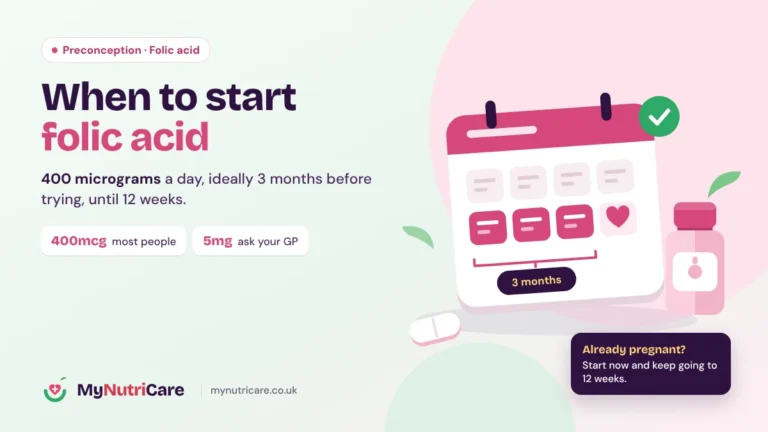
- Folic acid, 400 micrograms a day. Ideally start about 3 months before you try, and keep going until you are 12 weeks pregnant.
- Ask about 5mg if it applies to you. Some people need a higher dose on prescription, for example if they have diabetes or take medicine for epilepsy.
- Vitamin D, 10 micrograms a day from early October to late March. Take it all year if you usually cover most of your skin outdoors or spend a lot of time indoors, and consider it all year if you have black or brown skin. Do not take more than 100 micrograms a day.
- Check labels for vitamin A. Avoid cod liver oil and supplements containing vitamin A (retinol), and foods high in vitamin A such as liver, because too much can harm a baby's development.
The 5mg list has a few more conditions on it, including a family history of neural tube defects. We cover who qualifies, and what to do if you are already pregnant and did not take it, in folic acid before pregnancy: 400 micrograms or 5mg. For what to take once you are pregnant, see our pregnancy vitamins guide.
Medicines and long-term conditions
The most important rule here is the one people sometimes get backwards: do not stop a prescribed medicine on your own. The NHS says never stop a medicine prescribed to keep you healthy without checking with your doctor first, because stopping could harm both you and your baby. Your GP or specialist can advise on the safest option while you are trying.
- Regular medicine? Talk to your doctor, ideally before you start trying.
- Long-term condition? Book a routine GP appointment if you or your partner live with a condition such as epilepsy, diabetes, sickle cell disease or HIV. The same goes for worries such as past cancer treatment.
- Over-the-counter medicines. Check with a pharmacist, midwife or GP before taking any, including painkillers. Most medicines taken in pregnancy cross the placenta.
- Herbal remedies. The NHS advises not taking herbal remedies while trying to conceive. "Natural" does not mean safe in pregnancy.
For a specific medicine, the NHS points to the bumps website (best use of medicines in pregnancy). If you cannot find an answer there, your doctor, midwife or pharmacist can ask the UK Teratology Information Service for you.
If you have diabetes or epilepsy: plan further ahead
- Type 1 or type 2 diabetes. The NHS says you should be referred to a diabetic pre-conception clinic, and keep using contraception until your blood glucose is under control. The ideal HbA1c before pregnancy is no more than 48mmol/mol (6.5%). Above 86mmol/mol (10%), your care team should strongly advise delaying pregnancy until it comes down. You will need 5mg of folic acid on prescription.
- Epilepsy. Talk to an epilepsy specialist about your medicines before you try, as some can affect a baby's development and some can affect fertility. Do not stop them until you have had that advice, and use contraception until you have. This applies if the baby's father takes epilepsy medicine, too.
Other conditions can affect fertility directly. An overactive or underactive thyroid, for example, can cause ovulation problems, and some medicines, such as long-term or high-dose anti-inflammatory painkillers, can make it harder to conceive. If you have a condition like this or take one of these medicines regularly, mention it at the same appointment.
MMR, screening, STIs and carrier tests
Check you have had 2 doses of MMR
The MMR vaccine protects against measles, mumps and rubella. Rubella can seriously harm a baby's sight and hearing, and measles in pregnancy can cause premature birth, miscarriage or stillbirth. Because MMR contains a weakened live virus, it is not given during pregnancy, which is why the time to sort it is now.
Your GP surgery can tell you which vaccinations you have had. Full protection needs 2 doses, at least 1 month apart. Adults born between 1970 and 1990 are a priority group, as they may not have been vaccinated against all three infections. If you need a dose, ask your GP how long to wait before you start trying.
Cervical screening and STIs
The NHS suggests checking whether your cervical screening (smear test) is due, and booking it with your GP surgery if it is. It also suggests getting tested for sexually transmitted infections if you or your partner might have one. Several STIs, including chlamydia, can affect fertility.
Family history: sickle cell and thalassaemia
Sickle cell disease and thalassaemia are inherited blood conditions. You can be a carrier without having the condition, and carriers can pass the gene on. Both are more common in certain ethnic backgrounds; for sickle cell, the NHS lists family origins in Africa, the Caribbean, the Mediterranean, South and Southeast Asia and the Middle East. Testing is also worth considering if the trait runs in your family.
You can ask your GP surgery for a carrier blood test. The NHS says that if you are planning a child and know you are a carrier of thalassaemia, it is a good idea for your partner to be tested too: if you both carry beta thalassaemia, each child has a 1 in 4 chance of being born with it. Screening is also offered in pregnancy, usually by your midwife before 10 weeks, but knowing beforehand gives you more time to think through your options.
Smoking, vaping, alcohol, caffeine and drugs
Smoking
Smoking affects your chances of conceiving, and so does passive smoking. In men it can reduce semen quality. You are twice as likely to quit with support from a trained adviser, and NHS Stop Smoking services are free. The National Smokefree helpline is 0300 123 1044.
If vaping helps you stop smoking, the NHS says current evidence indicates e-cigarettes are much less risky than smoking. They are not risk-free, though. Nicotine replacement therapy can also be used in pregnancy if you cannot stop without it; speak to a pharmacist, GP or stop smoking adviser first.
Alcohol
The UK Chief Medical Officers' guideline is clear: "If you are pregnant or think you could become pregnant, the safest approach is not to drink alcohol at all." That keeps any risk to a baby to a minimum. Your GP can help if cutting down is hard. For a closer look, see our guide: Folic Acid Before Pregnancy.
Caffeine
The NHS planning pages do not set a separate caffeine limit for trying to conceive. Once you are pregnant, though, the limit is 200mg a day, because high caffeine intake is linked to a higher chance of miscarriage and stillbirth. Since most people do not know they are pregnant for the first few weeks, getting used to that level while you are trying makes the switch easier. Our caffeine in pregnancy guide breaks down the drinks in detail.
Illegal drugs
The NHS advises not using illegal drugs when preparing for pregnancy, and a GP can help. If you use cocaine, heroin or other opioids, speak to a doctor before you stop or cut down, so withdrawal is managed safely. FRANK offers confidential advice on 0300 123 6600, 24 hours a day.
Weight, activity and everyday food
Being underweight or overweight can make it harder to get pregnant. The NHS infertility page notes that a BMI of 30 or over reduces fertility, and that being overweight or severely underweight can affect ovulation. Your GP can advise on weight management.
Weight matters for the pregnancy itself, too. With a BMI of 30 or over, the NHS lists higher chances of miscarriage, gestational diabetes, high blood pressure and pre-eclampsia, and blood clots. Most pregnancies still result in a healthy baby, and your maternity team can take steps to prevent or manage problems.
Timing is the key point here. Once you are pregnant, the NHS says do not try to lose weight, because it will not reduce the chance of complications and may not be safe. So if you want to change your weight, the months before you try are the time to do it, with your GP's help if you need it.
For activity, the general NHS guideline for adults is about 150 minutes of moderate activity a week (or 75 minutes of vigorous activity), plus muscle-strengthening activities on at least 2 days.
For food, the NHS simply says eat a healthy diet. You do not need special "fertility" foods. If you want help turning that into real meals, our Complete Preconception Course covers it.
Your partner's health matters too
Several items on the NHS list apply to the partner as well.
- Smoking. It can reduce semen quality, and smoke at home affects you both. Partners can call the Smokefree helpline too.
- Alcohol. Heavy drinking can affect sperm quality.
- Conditions and medicines. The NHS GP list covers you or your partner: long-term conditions, regular medicines or herbal remedies, or a fertility issue such as low sperm count.
- Family history. If the baby's father has a neural tube defect, or there is one in the family, the mother may need 5mg of folic acid.
- Work exposures. Certain pesticides, solvents and metals can affect fertility, particularly in men.
- Drugs and steroids. Illegal drugs such as cannabis and cocaine can affect semen quality, and long-term misuse of anabolic steroids can reduce sperm count and movement.
- Heat. A higher temperature around the testicles is linked to lower semen quality. The NHS notes it is uncertain whether loose underwear makes a difference.
Poor-quality semen is one of the most common causes of infertility. If it is taking longer than expected, your GP may refer you both for tests, not just the woman.
Feelings, work and money (lightly)
Trying for a baby can be stressful, and the NHS notes that stress can strain a relationship and lower sex drive. In severe cases it may also affect ovulation and sperm production. Talk to each other about expectations, including how you will feel if it takes a few months. The NHS also has a page on mental health in pregnancy if low mood or anxiety is already part of the picture.
On the practical side, it helps to look up your employer's maternity or paternity policy, think about how appointments will fit around work, and have a rough idea of the costs ahead.
LGBT+ parents and anyone using IUI can follow the same health checklist; the NHS planning page links to further support for different routes to parenthood.
Before you try: tick-list
Tick what you have done. Nothing is saved, and it clears when you reload the page.
Want the full plan? The Complete Preconception Course turns this into a 12-week plan.
When to speak to a GP
Book a non-urgent GP appointment if you want to get pregnant and:
- you have been trying for a year or more through sex (sooner if you are a woman aged 36 or over, or already know you may have fertility problems)
- you or your partner live with a condition such as epilepsy, diabetes, sickle cell disease or HIV
- you or your partner take prescribed or over-the-counter medicines, or herbal remedies
- you or your partner have a fertility issue, such as endometriosis or a low sperm count
- you cannot have sex, or find it difficult, for example because of a disability
- you need help to stop smoking, drinking or using illegal drugs
If it is taking longer than you hoped, your GP may refer you both for tests.
Turn the checklist into a 12-week plan
The Complete Preconception Course (Premium, 4 hours, £19.99) takes everything above and sets it out week by week, from supplements to meals, so you know what to do and when. Just want the supplement side? Vitamins Before Pregnancy (£12.99) covers folic acid, vitamin D and label checking.
See the 12-week courseVitamins Before PregnancyNot sure which course fits? Browse all preconception courses.
Related guides
- What to eat in pregnancy: an example balanced day.
- Fish limits for pregnancy and trying: tuna, oily fish and what to avoid.
- Which course should I take?: match a course to your goal.
Questions people ask
What should I do before trying to get pregnant?
The NHS suggests taking folic acid and vitamin D, checking you have had the MMR vaccine, checking whether cervical screening is due, talking to your GP about any medicines or health conditions, stopping smoking, alcohol and illegal drugs, eating a healthy diet and aiming for a healthy weight.
How long before trying for a baby should I take folic acid?
Ideally about 3 months before you start trying, at 400 micrograms a day, and then until you are 12 weeks pregnant. Some people need a higher 5mg dose, which a GP can prescribe.
How long does it take to get pregnant?
It varies. The NHS says over 8 in 10 couples where the woman is under 40 conceive within a year if they have regular unprotected sex every 2 or 3 days.
When should I see a GP if I am not getting pregnant?
After a year of trying. See a GP sooner if you are a woman aged 36 or over, or if you already know you or your partner may have fertility problems.
Should I stop my medication before trying to get pregnant?
No, not without advice. The NHS says do not stop any prescribed medicine without first speaking to your GP or specialist. They can advise on the safest option while you are trying to conceive.
Can I drink alcohol while trying to conceive?
The UK Chief Medical Officers say that if you are pregnant or think you could become pregnant, the safest approach is not to drink alcohol at all.
Do I need the MMR vaccine before getting pregnant?
If you have not had 2 doses, yes. Rubella can seriously harm a baby's sight and hearing, and MMR is not given during pregnancy. Your GP surgery can check your records.
How often should you have sex when trying to get pregnant?
The NHS suggests having sex without contraception every 2 to 3 days. You are most likely to conceive around ovulation, which usually happens about 14 days before your next period, depending on your cycle length. You can browse every course and guide on the My Nutri Care home page.
Sources
- NHS: Planning your pregnancy (page last reviewed 2 June 2026)
- NHS: Trying to get pregnant (page last reviewed 2 June 2026)
- NHS: Infertility
- NHS: Vitamins, supplements and nutrition in pregnancy (page last reviewed 3 June 2026)
- NHS: Medicines in pregnancy
- NHS: MMR vaccine
- NHS: Infertility causes
- NHS: Diabetes and pregnancy
- NHS: Epilepsy and pregnancy
- NHS: Overweight and pregnant
- NHS: Thalassaemia carriers
- NHS: Sickle cell disease
- NHS: Foods to avoid in pregnancy (caffeine) (page last reviewed 15 June 2026)
- NHS: Stop smoking in pregnancy
- NHS: Illegal drugs in pregnancy
- GOV.UK: UK Chief Medical Officers' low risk drinking guidelines
- NHS: Physical activity guidelines for adults aged 19 to 64
This article is general information based on UK public health guidance. It is not medical advice. If you have a health condition, take regular medicines or have questions about your own fertility, speak to your GP, pharmacist or specialist.