Feeling on edge, tearful or snappy for no clear reason is one of the most common and least talked-about parts of perimenopause and menopause. Here is what the NHS and NICE say is going on, what helps, and the four levels of support you can use, from self-help to urgent help.

Last reviewed 18 October 2026 · Checked against NHS guidance · 16 min read
The short answer
The NHS lists mood swings, low mood, depression and anxiety among the symptoms of perimenopause and menopause, and says they can feel worse when you are not sleeping well. Rest, regular exercise, relaxing activities and talking to people you trust can all help. NICE says HRT may be offered if you feel low as a result of menopause, and CBT (a talking therapy) may be offered for low mood or anxiety. In England you can usually refer yourself to NHS Talking Therapies without seeing a GP. If low mood lasts 2 weeks or more, or you are struggling to cope, see your GP.
This guide goes deeper on one part of our full UK list of menopause symptoms and what helps each one. Every fact below comes from current NHS and NICE pages, listed at the end.
If you are struggling right now: call 999 or go to A&E if your life is at risk or you do not feel you can keep yourself safe. For urgent advice, call 111 and select the mental health option, or ask your GP for an urgent appointment.
To talk to someone, call Samaritans free on 116 123, or text SHOUT to 85258. More on urgent help.
Why mood can change around menopause
The NHS describes menopause and perimenopause as a natural part of life, when hormone levels drop and periods change and then stop. It usually affects women aged 45 to 55, although it can start earlier. Changes in mood are part of that picture: the NHS symptoms page says simply, "You may have mood swings, low mood or depression."
Mood rarely changes on its own. The NHS links it to other symptoms in three clear ways:
- Sleep. Not being able to get to sleep or stay asleep "can make you feel irritable, stressed and anxious". Mood changes and memory problems may feel worse when you have sleep problems and tiredness.
- Night sweats and hot flushes. Sleep problems may be worse if you also have night sweats. Hot flushes themselves can make you sweat a lot, feel dizzy, or cause palpitations or anxiety. Our guide to hot flushes and night sweats covers the triggers and cooling tips.
- Symptoms shift over time. The NHS notes that symptoms can change, so some may improve and be replaced by others, such as low mood and anxiety. That is why feeling low can catch you out even if your flushes have settled.
Mood changes can start in perimenopause, while you still have periods. NICE's information for the public makes an important point too: low mood is a common symptom of menopause, and it is different from depression. Both are real and both can be helped, but the routes differ, which the next sections explain.
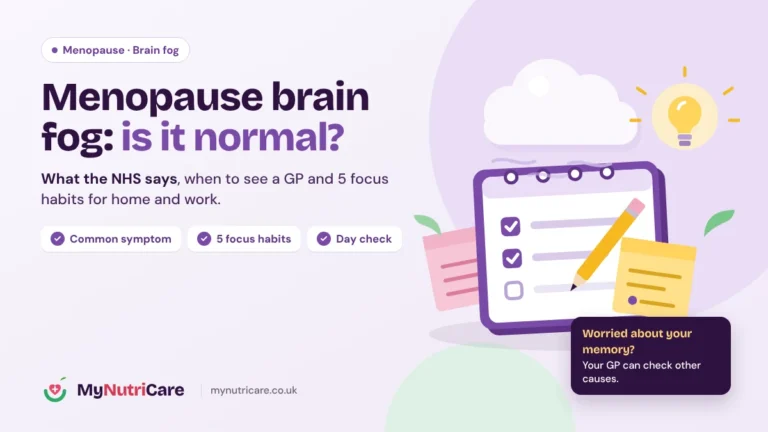
Forgetfulness or poor concentration often comes along too: see menopause brain fog.
What menopause mood changes can feel like
There is no single pattern. These are the feelings NHS pages describe; you may recognise one column or a mix.
- Mood swings
- Feeling irritable and stressed
- Feeling intolerant of others
- Often worse after poor sleep
- Worry that is hard to control
- Restlessness, trouble concentrating
- Palpitations, muscle tension, dizziness
- Tiredness and difficulty sleeping
- Sadness
- Low confidence
- Tiredness, sleep problems
- Feeling anxious or irritable too
Most people feel anxious sometimes, and the NHS says that does not always mean an anxiety disorder. A GP may diagnose generalised anxiety disorder (GAD) if you have felt anxious a lot of the time for at least 6 months. Palpitations are also a reason the NHS gives to see a GP about menopause symptoms, so do not just put them down to nerves.
Low mood or depression? How to tell the difference
This is the question behind many searches for "menopause depression". The NHS draws the line mainly by how long it lasts and how much it affects your life.
Low mood
- Common, and can bring sadness, anxiety, irritability, low confidence, tiredness or sleep problems
- Often gets better after a few days or weeks
- Self-help, rest and talking things through often help
- NICE says it is a common symptom of menopause and different from depression
Possible depression
- Low mood that lasts 2 weeks or more
- Losing interest or enjoyment, feeling hopeless, struggling to concentrate
- Symptoms that persist for weeks or months and interfere with work, social life and family life
- Thoughts of suicide or self-harm: get help straight away
Other NHS signs of depression include feeling tearful or guilt-ridden, low self-esteem, finding decisions difficult, changes in appetite or weight, lack of energy, low sex drive and avoiding friends. Several overlap with menopause symptoms, which is why they are easy to dismiss.
The 2-week rule
The NHS says to see a GP if you have symptoms of depression for most of the day, every day, for more than 2 weeks. You do not need to work out whether it is "the menopause" or "depression" first. That is your GP's job, and they can talk you through options for both.
This guide tells you what is normal and when to get help. Menopause Mood and Anxiety (£17.99, Focused, 2 hr) helps you act on it: understand your mood changes, track your patterns, build a coping plan and know when and where to get support.
Mood pattern check (today)
Five quick taps about today. You get a short reflection and ideas based on NHS advice. It never diagnoses, and nothing is saved.
If you have thoughts of harming yourself or ending your life, do not wait: call 999 or go to A&E if you might act on them, call 111 and select the mental health option, or call Samaritans free on 116 123.
How low has your mood been today?
How anxious or on edge have you felt?
How irritable or snappy have you felt?
How did you sleep last night?
Hot flushes or night sweats in the last 24 hours?
Has low mood been there most days for 2 weeks or more?Optional, but it changes the advice.
Tap an answer to start
Your reflection builds as you go. Answer as many as you like.
One day is a snapshot, not a diagnosis. Patterns over weeks tell you and your GP far more: the Menopause Mood and Anxiety course helps you track them and turn them into a coping plan.
What helps day to day
The NHS menopause advice for mood is short: get as much rest as you can, exercise regularly and do relaxing activities. Its anxiety and low mood pages add detail. Here it is in one place.
If you only manage one change this week, sleep is a sensible place to start. Our Sleep and Menopause course (£14.99) has a night symptom diary and a bedroom cooling checklist if that is your main problem.
One caution: the NHS says to speak to a doctor before taking herbal supplements or complementary medicines, and that for remedies such as red clover and black cohosh there is very little evidence on how well they work or how safe they are.
CBT: the talking therapy the NHS and NICE mention
Cognitive behavioural therapy (CBT) is a talking therapy. It comes up again and again in menopause guidance:
- The NHS says CBT can help with low mood, anxiety and sleep problems linked to menopause, and that it can also help manage hot flushes.
- NICE's information for the public says you may be offered CBT if you have low mood or anxiety as a result of menopause.
- The NICE menopause guideline (NG23, updated November 2024) recommends considering CBT for depressive symptoms linked to menopause, and menopause-specific CBT for hot flushes, night sweats and sleep problems, alongside HRT or instead of it.
CBT is also one of the therapies offered by NHS Talking Therapies, which you can often reach without a GP appointment. More on that below.
HRT, antidepressants and what NICE says
This is where advice can sound contradictory, so here is exactly what each source says.
HRT
The NHS lists anxiety and low mood caused by menopause among the symptoms HRT can help relieve. NICE says that if you are feeling low as a result of menopause, you may be offered HRT. HRT has benefits and risks, so it is a decision to make with your GP. Our guide to HRT in the UK explains the types, benefits and risks in plain English.
Antidepressants
The NHS treatment page says that if you have low mood, depression or anxiety caused by perimenopause or menopause, you may be offered antidepressants. NICE adds an important detail: it has not been shown that the antidepressants called SSRIs and SNRIs help with low mood during menopause if you have not been diagnosed with depression. If you have been diagnosed with depression, NICE points to its separate guidance on depression.
So your GP will want to know what you feel and for how long before suggesting treatment. A few weeks of notes on mood, sleep and flushes helps. For a closer look, see our guide: Menopause weight gain.
Speak to your GP or pharmacist
Do not start, stop or change any medicine on your own. Your GP can talk you through HRT, CBT and other options and what suits you, and your pharmacist can answer questions about medicines you already take.
The support ladder: where to go and when
Think of support as four steps. You can start on any step, and moving up is not a failure.
How to self-refer to NHS Talking Therapies
NHS Talking Therapies are free NHS services for common problems including anxiety and depression. For many problems, anxiety and depression included, you can refer yourself without speaking to a GP. You do not need a diagnosed mental health condition to refer yourself.
- Check you can use itThe NHS service finder says you need to live in England and be aged 18 or over (some areas also accept 16 and 17 year olds). The NHS Talking Therapies page says you need to be registered with a GP.
- Find your local serviceOn the NHS website, search for an NHS talking therapies service using the name of your GP surgery. If you are not registered with a GP, search online for "NHS talking therapies" with your town or county to see whether you can self-refer there.
- Refer yourselfFill in your local service's referral. The service then contacts you and, if it can help, tells you how long you may wait for a first session.
- Get matched to a therapyOptions include guided self-help, CBT, counselling, interpersonal therapy, couples therapy and mindfulness-based cognitive therapy, depending on what fits your problem.
It can help to mention menopause when you refer, along with the symptoms that bother you most. If you live in Scotland, Wales or Northern Ireland, ask your GP what talking therapy services are available locally. If you are not sure whether self-referral is right for you, speak to a GP.
When to see your GP about your mood
The NHS low mood page says to see a GP if:
- your low mood has lasted more than 2 weeks
- you are struggling to cope
- things you are trying yourself are not helping
- you would prefer a referral from a GP
The menopause symptoms page also says to see a GP if you think you have perimenopause or menopause symptoms and want to know your options, or if you have symptoms such as palpitations. You do not need to wait until things are "bad enough".
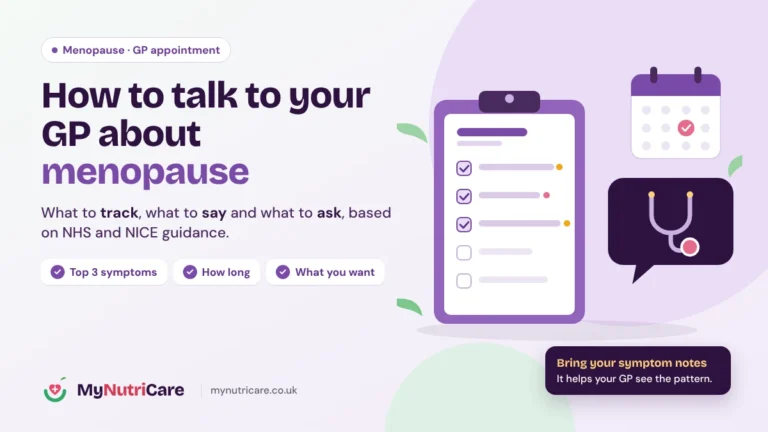
Appointments are short, so go prepared: a few weeks of notes on your mood, sleep and flushes, a list of what you have tried, and the one or two things you most want help with. Our guide to preparing for a menopause GP appointment shows what to bring and what to ask.
Telling your partner, family or friends
The NHS suggests talking to people going through the same thing, such as family, friends or colleagues. The people around you may be noticing changes without understanding them. A few ideas:
- Pick a calm moment, not straight after a row or a bad night.
- Name it plainly. For example: "Mood swings and anxiety are recognised menopause symptoms. Some days I'm more irritable or low than I want to be, and it isn't about you."
- Ask for one specific thing, such as a lie-in after a broken night, a walk together, or a quiet signal when you need space.
- Share what you are doing about it, whether that is sleep changes, a GP appointment or self-referral, so they can support rather than worry.
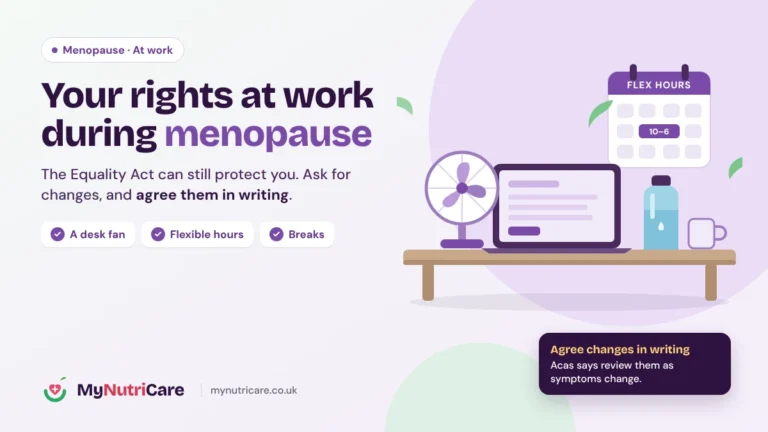
If work is part of the strain, our guide to menopause at work in the UK covers how to talk to your manager and ask for changes.
When it is urgent
Call 999 or go to A&E now if someone's life is at risk, you have seriously harmed yourself, or you do not feel you can keep yourself or someone else safe.
For urgent advice: call 111 and select the mental health option (NHS 111 is open 24 hours a day), or call your GP and ask for an urgent or emergency appointment.
To talk to someone: call Samaritans free on 116 123, or text SHOUT to 85258 (open 24 hours a day, every day).
If you are having thoughts of ending your life, the NHS says it is important to tell someone. That can be a friend, a family member, your GP or a helpline. You do not have to explain it perfectly.
Turn what you have read into a plan
This article tells you what is happening and where support is. Our courses give you the trackers, plans and scripts to act on it. Not sure which fits? See our guide to choosing a course.
Menopause Mood and Anxiety
Understand your mood changes, track your patterns, build a coping plan, and know when and where to get support.
Sleep and Menopause
A night symptom diary, a bedroom cooling checklist and calm back-to-sleep audio for broken nights.
Complete Menopause Guide
Every stage in one place, with a symptom tracker, a GP appointment summary and who to ask for help.
Courses are for education and self-management. They do not diagnose or treat any condition and do not replace your GP. Full refund within 14 days if you have completed less than 20% of the course and no certificate has been issued. Browse all menopause courses or our mental wellbeing courses.
Related guides
- Menopause symptoms: the full UK list: every symptom and what helps each one.
- HRT explained: types, benefits and risks, from NHS guidance.
- Menopause brain fog: memory and concentration changes and what helps.
- Your menopause GP appointment: what to bring and what to ask.
Questions women ask
Can menopause cause anxiety?
Yes. The NHS lists anxiety among perimenopause and menopause symptoms. Hot flushes can cause palpitations or anxiety, and poor sleep can make you feel irritable, stressed and anxious. NICE says CBT may be offered for anxiety as a result of menopause.
Are mood swings a sign of perimenopause?
They can be. The NHS says you may have mood swings, low mood or depression during perimenopause and menopause, and these can feel worse with poor sleep and tiredness.
How can I tell if it is menopause low mood or depression?
NICE says low mood is a common menopause symptom and different from depression. The NHS says low mood often improves after a few days or weeks. If it lasts 2 weeks or more, see a GP.
Does HRT help with menopause anxiety and low mood?
The NHS lists anxiety and low mood caused by menopause among the symptoms HRT can help relieve, and NICE says HRT may be offered if you feel low as a result of menopause. Talk it through with your GP.
Are antidepressants used for menopause low mood?
The NHS says you may be offered antidepressants for low mood, depression or anxiety caused by menopause. NICE says SSRIs and SNRIs have not been shown to help menopausal low mood if you have not been diagnosed with depression.
Can I self-refer to NHS Talking Therapies for menopause anxiety?
Yes, in England, if you are registered with a GP and aged 18 or over (16 or over in some areas). You can refer yourself for anxiety or depression without seeing a GP or having a diagnosis.
What should I do if I feel I cannot cope?
Ask your GP for an urgent appointment, call 111 and select the mental health option, or call Samaritans free on 116 123. Call 999 or go to A&E if your life is at risk or you cannot keep yourself safe.
Sources
- NHS: Symptoms of menopause and perimenopause (last reviewed 19 May 2026)
- NHS: Things you can do to help menopause and perimenopause symptoms (last reviewed 19 May 2026)
- NHS: Treatment for menopause and perimenopause (last reviewed 19 May 2026)
- NHS: Menopause and perimenopause
- NHS: Benefits and risks of HRT
- NICE NG23 information for the public: Managing your symptoms
- NICE: Menopause: identification and management (NG23), updated November 2024
- NHS: Low mood, sadness and depression (last reviewed 29 July 2026)
- NHS: Symptoms of depression in adults
- NHS: Generalised anxiety disorder in adults
- NHS: NHS talking therapies for anxiety and depression
- NHS: Find an NHS talking therapies service
- NHS: Where to get urgent help for mental health
- NHS: Help for suicidal thoughts
This article is general information based on UK public health guidance. It is not medical advice and cannot diagnose anxiety, depression or any other condition. If you are worried about your mood, speak to your GP. If you are in crisis, call 999, call 111 and select the mental health option, or call Samaritans on 116 123.