How long expressed breast milk keeps at room temperature, in the fridge, in the ice compartment and in the freezer, using the current NHS figures. Plus how to defrost and warm it safely, carry it in a cool bag, and know when to pour it away.

Last reviewed 12 October 2026 · Checked against NHS guidance · 12 min read
The short answer
The NHS says freshly expressed breast milk can be kept at room temperature for no more than 4 to 6 hours, at the back of the fridge for up to 8 days at 4°C or lower (within 3 days if you are not sure of your fridge's temperature or it runs at 5°C to 10°C), in the ice compartment of a fridge for 2 weeks, and in a freezer for up to 6 months at -18°C or lower. Defrost it slowly in the fridge, use it straight away once defrosted, and never re-freeze it. Never use a microwave.
Expressing gives you options: someone else can feed your baby, you can go back to work, and the NHS notes that when you start introducing solids you may want to include some breast milk in your baby's food. All of it depends on storing the milk well. This guide sets out exactly what the NHS says, and clears up why different websites quote different numbers.
Breast milk storage times: the NHS table
These are the figures given on the NHS pages on expressing and storing breast milk. The times are maximums, not targets, and they apply to milk that was stored in a clean, sterilised container from the start.
| Where the milk is | Temperature | NHS maximum | What to know |
|---|---|---|---|
| Room temperature (freshly expressed) | Room | 4 to 6 hours | Refrigerate straight away if you can. "No more than 4 to 6 hours" out. |
| Back of the fridge | 4°C or lower | Up to 8 days | At the back, not in the door. |
| Fridge, temperature unknown | Not sure, or 5°C to 10°C | Within 3 days | A fridge thermometer tells you which row applies. |
| Ice compartment of a fridge | Not stated | 2 weeks | The small frozen box inside some fridges, not a separate freezer. |
| Freezer | -18°C or lower | Up to 6 months | Label and date before freezing. |
| Cool bag with ice packs | Milk already cooled in the fridge | Up to 24 hours | For carrying milk, for example home from work. |
| Defrosted milk | Any | Use straight away | No NHS time for keeping it later. Never re-freeze. |
| Warmed milk | Body temperature | Within 1 hour | Throw away any warmed milk left over. |
| A bottle your baby has drunk from | Any | Within 1 hour | Then throw away anything left over. |
A printable version of these times, plus labels for your bottles and bags, comes with our Expressing and Storing Breast Milk course.
Why some pages say 5 days and others say 8
Search "how long can breast milk stay in the fridge" and you will find 3, 5 and 8 days, sometimes on the same website, because not every page has been updated at once.
Both pages agree on the part that matters most: the temperature, not the number of days, decides how long milk keeps. Eight days only applies at 4°C or lower. If you do not know your fridge's temperature, or it runs at 5°C to 10°C, the current NHS page says to use the milk within 3 days (the older page puts it as "higher than 4C"). A fridge thermometer, which the NHS mentions you can buy online, settles the question.
Where to keep milk in the fridge and freezer
Position matters as much as time. NHS Best Start in Life says to store milk "at the back of the fridge – not the door". The door is the warmest part of the fridge and warms up every time it opens.
Is my milk still OK? A 10‑second check
Pick where the milk has been and for how long. Answers use NHS figures only. Nothing is saved.
Where has the milk been?
For how long?Choose a place first.
Answer the questions above
Your result will appear here.
A quick guide based on NHS times, not a guarantee. If in doubt, throw it out. The Expressing and Storing Breast Milk course includes a printable storage times chart and milk labels.
How to store expressed breast milk, step by step
Putting together the NHS advice on expressing and storing, a safe routine looks like this:
- Start clean. Wash your hands well, and make sure your pump and container are clean and sterilised before you start.
- Use the right container. Store milk in a sterilised container or in special breast milk storage bags.
- Close it securely. Screw the lid on the bottle securely once you have finished expressing.
- Chill it promptly. Put the milk in the fridge straight away, or leave it at room temperature for no more than 4 to 6 hours.
- Label and date it. The NHS says to label and date milk before it goes in the fridge or freezer, and always before freezing. A date on every container also lets whoever is feeding your baby use the oldest milk first.
- Store small amounts. Keep milk in small quantities to avoid wasting any, because leftovers from a feed cannot be saved.
- Put it at the back. Store it at the back of the fridge, not in the door.
The fridge temperature check
Few of us know how cold our fridge really is, and the NHS times depend on it. Put a fridge thermometer at the back of a shelf. If it reads above 4°C, use the 3-day rule until you have turned the fridge colder and checked again.
Freezing breast milk
Freezing is how you build a stock for work or time away from your baby. The NHS gives two freezing times:
- Ice compartment of a fridge: 2 weeks. This is the small frozen box found at the top of some fridges.
- Freezer at -18°C or lower: up to 6 months. This means a proper freezer or the freezer section of a fridge-freezer.
Freeze milk in small quantities, so you only defrost what your baby needs for one feed, and label and date each bag or bottle before it goes in. Using the oldest milk first keeps everything well within the time limit.
Building a freezer stock? Expressing and Storing Breast Milk includes a pumping planner, a storage times chart and ready-to-print milk labels.
How to defrost breast milk
The NHS describes one best method and one quicker method.
Best: slowly, in the fridge
It is best to defrost frozen breast milk slowly in the fridge, leaving it to thaw out completely before you use it. Thawing in the fridge is slow, so it needs some planning; the NHS does not give a thawing time.
When you need it now: warm water
If you need the milk straight away, stand the bag or container in a jug of warm water, or hold it under running warm water.
After defrosting
- If the milk has separated, shake it gently to mix it.
- Use it straight away.
- Throw away any milk left over after the feed.
- Never re-freeze milk that has been defrosted.
How long does defrosted breast milk last?
This is where UK advice is shortest. Both NHS pages say defrosted milk should be used straight away (Best Start in Life says "used immediately"). Neither gives a time for keeping defrosted milk in the fridge for later, and neither gives a room temperature time for it either.
You may see "24 hours in the fridge" for thawed milk on other websites, often from non-UK guidance. That figure is not on the NHS pages, so we do not give it here. If you have defrosted milk you could not use straight away and you are unsure whether to give it, ask your health visitor or midwife, and if in doubt, throw it out. Defrosting one small portion at a time avoids the problem altogether.
Warming and feeding expressed milk
You do not have to warm breast milk at all. The NHS says you can feed expressed milk straight from the fridge if your baby is happy to drink it cold.
If your baby prefers it warm, warm it to body temperature by sitting the bottle in a jug of warm water or holding it under warm running water. Do not use a microwave or a stove: the NHS warns that microwaves can create hot spots that can burn your baby's mouth.
- Warmed milk: NHS Best Start in Life says to use warmed-up breast milk within an hour, and throw away any warmed milk that is left over.
- After a feed: once your baby has drunk from a bottle of breast milk, use it within 1 hour, and throw away anything left over.
Bottle feeding expressed milk
NHS Best Start in Life gives a few simple pointers for whoever is giving the bottle. Hold the bottle horizontal, just slightly tipped, so milk does not flow too fast. Let your baby take short breaks and follow their cues, and never force them to finish. Never prop the bottle or leave your baby alone with it, and never bottle feed a baby lying flat on their back, as both carry a choking risk (see how to spot choking in a baby). If you are mixing breastfeeds and bottles, Combination Feeding Education covers paced bottle feeding and protecting your milk supply.
Carrying breast milk in a cool bag
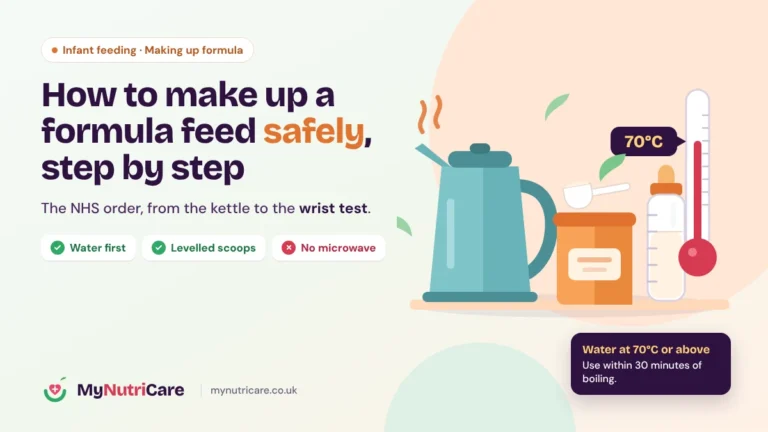
The NHS says breast milk that has been cooled in the fridge can be carried in a cool bag with ice packs for up to 24 hours. For a closer look, see our guide: How to Make Up a Formula Feed Safely.
Note the two conditions: the milk must already be cold from the fridge, and the bag needs ice packs. When you arrive, put the milk in a fridge or freezer.
The NHS does not say whether time in a cool bag should be taken off the fridge or freezer time afterwards, or give a cool bag time for freshly expressed milk that has not been chilled first. To stay on the safe side, use milk that has travelled first, and chill freshly expressed milk in a fridge before it goes in the bag.
When to throw breast milk away
Based on the NHS times, throw milk away if:
- It has been at room temperature for longer than 4 to 6 hours.
- It has been in the fridge for more than 8 days at 4°C or lower, or more than 3 days if you are not sure of the temperature.
- It has been in an ice compartment for more than 2 weeks, or in a freezer for more than 6 months.
- It is left over in a bottle your baby has drunk from, once an hour has passed.
- It was warmed and not finished.
- It was defrosted and is left over after a feed. Never put defrosted milk back in the freezer. (The NHS says to use defrosted milk straight away and gives no time for keeping it, so ask your health visitor if you are unsure about milk you have not used yet.)
- It has no label and you cannot be sure when it was expressed.
Clean and sterile equipment
Storage times assume the milk went into clean, sterile equipment. The NHS says to make sure the pump and all its parts (bottles, valves, funnel and so on) are clean and sterile before each use, and to wash and sterilise the pump and parts after each session.
The NHS sterilising guidance says to sterilise all feeding equipment until your baby is at least 12 months old:
- Clean first. Wash everything in hot, soapy water as soon as possible after use, then rinse in clean, cold running water before sterilising. A dishwasher cleans equipment but does not sterilise it.
- Cold water sterilising solution: follow the manufacturer's instructions, leave equipment in the solution for at least 30 minutes, and change the solution every 24 hours.
- Steam (electric or microwave steriliser): follow the manufacturer's instructions, as types vary.
- Boiling: only for items that are safe to boil. Boil in a large pan of water for at least 10 minutes, keeping everything under the water.
If you also give formula, the same equipment rules apply: see how to make up a formula feed.
Hand expressing or a pump?
Whichever you choose, the storage rules are the same. The NHS says to use whichever method is more comfortable for you:
- By hand: needs no pump or electricity, and the NHS notes it can help if you have a blocked milk duct. It takes time and practice to learn.
- Manual pump: cheaper, but may not be as quick as an electric pump.
- Electric pump: on some, the suction strength can be altered. Start on the lowest setting and build up slowly, as setting it high straight away may be painful or damage your nipple. A pump should never cause bruising, and you may be able to get different funnel sizes to fit your nipples.
When you are starting out, NHS Best Start in Life suggests allowing at least 30 to 45 minutes per session, falling to about 15 to 20 minutes once you are used to it. Step-by-step hand expressing, choosing a pump and a pumping planner are all in the Expressing and Storing Breast Milk course.
Storing milk for a baby in hospital
The times in this guide are for healthy babies at home. If you are expressing because your baby is premature or sick, the NHS says to ask the hospital staff caring for your baby for advice on how to store it, and follow the unit's own instructions.
NHS Best Start in Life adds that if your baby is too small or poorly to breastfeed, it is important to start expressing as soon as possible, aiming for 8 to 12 times in 24 hours, including once at night. Your midwife can help you clean and sterilise the equipment, and there may be a lactation specialist on site.
Expressing and storing milk at work
Going back to work is one of the most common reasons for building a milk stash. The NHS page on breastfeeding and going back to work says:
- Before you return, give your employer written notification that you are breastfeeding. Your employer must then carry out a specific risk assessment.
- Workplace regulations require employers to provide suitable facilities where breastfeeding mothers can rest.
- The Health and Safety Executive recommends, as good practice, a private, healthy and safe environment to express and store milk. Toilets are not a suitable place to express.
- A secure, clean fridge for stored milk is part of a supportive workplace policy.
NHS Best Start in Life notes you might need to express at least every 3 hours when you are first away from your baby. To get milk home, chill it in the fridge at work, then carry it in a cool bag with ice packs (up to 24 hours). Label each bottle so your childminder or partner uses the oldest milk first.
Our Returning to Work While Breastfeeding course helps you plan the conversation with your employer, your expressing breaks and your milk stash.
Get help early
Speak to your midwife, health visitor or GP if expressing is painful, a pump is bruising you, you think you may have a blocked duct, or you are worried your baby is not getting enough milk. If your baby is in a neonatal unit, the staff there will advise you on expressing and storage.
For confidential breastfeeding information and support, call the National Breastfeeding Helpline on 0300 100 0212. Lines are open 24 hours a day, every day of the year.
Make expressing easier
This guide gives you the storage rules. Our short courses give you the tools to put them into practice.
Expressing and Storing Breast Milk
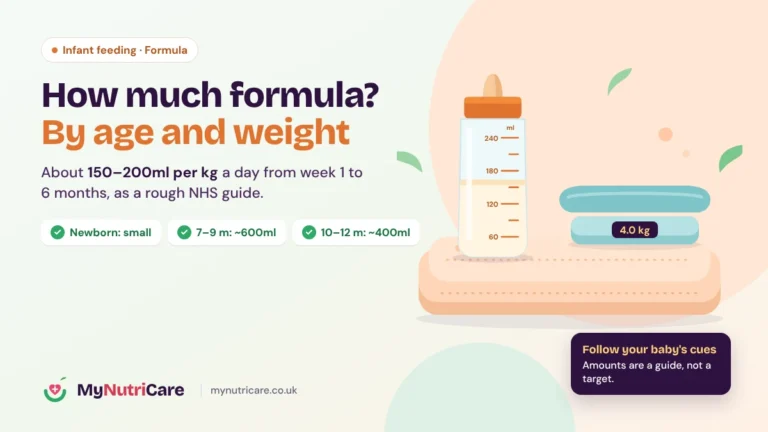
Hand expressing and pumping, with a pumping planner, a printable storage times chart, milk labels and a cleaning checklist. For a closer look, see our guide: Formula Feeding Amounts.
Returning to Work While Breastfeeding
Plan your return, your expressing routine and the conversation with your employer.
Combination Feeding Education
Plan your feeds, protect your milk supply and learn paced bottle feeding.
Related guides
- How much formula by age (UK): if you combine breast and bottle.
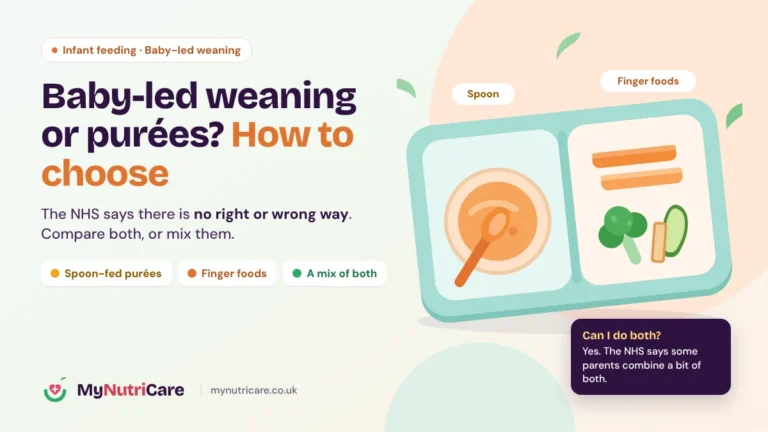
- Starting solids: baby-led or purées: choosing a weaning approach.
- Caffeine while pregnant or breastfeeding: the 200mg daily limit explained.
Questions parents ask
How long can breast milk stay in the fridge?
The NHS says up to 8 days at the back of the fridge at 4°C or lower. If you are not sure of your fridge's temperature, or it runs between 5°C and 10°C, use the milk within 3 days.
How long can breast milk stay out at room temperature?
NHS Best Start in Life says you can refrigerate freshly expressed milk straight away, or leave it out at room temperature for no more than 4 to 6 hours.
How do you defrost frozen breast milk?
It is best to defrost it slowly in the fridge. If you need it straight away, stand the container in a jug of warm water or hold it under running warm water. Shake gently if it has separated, then use it straight away.
How long does defrosted breast milk last?
The NHS says to use defrosted breast milk straight away and gives no time for keeping it in the fridge or at room temperature for later. If you are unsure about milk you defrosted earlier, ask your health visitor or midwife, and if in doubt, throw it out.
Can you refreeze breast milk that has been defrosted?
No. The NHS says do not re-freeze breast milk that has been defrosted. Use it straight away and throw away any left over after the feed.
Can I warm breast milk in the microwave?
No. The NHS says not to heat up or defrost breast milk in a microwave or on the stove, as microwaves can cause hot spots that can burn your baby's mouth. Use a jug of warm water or warm running water instead.
How long is breast milk good for after a feed?
Once your baby has drunk from a bottle of breast milk, use it within 1 hour and throw away anything left over. Throw away any warmed milk your baby does not finish.
Can I carry breast milk in a cool bag?
Yes. The NHS says breast milk that has been cooled in the fridge can be carried in a cool bag with ice packs for up to 24 hours. You can browse every course and guide on the My Nutri Care home page.
Sources
- NHS: Expressing and storing breast milk (last reviewed 18 August 2026)
- NHS Best Start in Life: Storing breast milk
- NHS Best Start in Life: Expressing breast milk with a pump
- NHS Best Start in Life: Expressing hints, tips and more help
- NHS Best Start in Life: Feeding advice for expressed milk
- NHS Best Start in Life: Expressing your breast milk
- NHS: Sterilising baby bottles
- NHS: Breastfeeding and going back to work (last reviewed 4 June 2024)
- NHS Best Start in Life: Breastfeeding and returning to work
This article is general information based on UK public health guidance. It is not medical advice. If your baby was born prematurely, is in hospital or has a health condition, or you have questions about your own baby, speak to your midwife, health visitor or GP.