Spoon-fed purées, finger foods from the very first meal, or a bit of both? The NHS says there is no right or wrong way. Here is what each approach looks like at your table, how textures should move on, the finger food shapes to use, and a quick quiz to help you choose.

Last reviewed 12 October 2026 · Checked against NHS guidance · 14 min read
The short answer
Both work. The NHS says some parents prefer baby-led weaning to spoon feeding, while others do a combination of both, and that there is no right or wrong way. What matters most is that your baby eats a wide variety of food. Baby-led weaning means offering only finger foods and letting your baby feed themselves from the start. If you spoon-feed, the NHS asks you to move on from purées to mashed, lumpy and finger foods as soon as your baby can manage them. And the NHS is clear that there is no more risk of choking when a baby feeds themselves than when they are fed with a spoon.
Not sure your baby is ready for any solid food yet? Start with our guide to when to start weaning and the 3 readiness signs. This article picks up the next question: once your baby is ready, how do you feed them?
What is baby-led weaning?
The NHS defines baby-led weaning as giving your baby only finger foods and letting them feed themselves from the start, instead of feeding them puréed or mashed food on a spoon. There is no "purée stage" first. From the first meal, your baby is offered pieces of soft food they can pick up, explore and bring to their mouth.
In practice that means a few pieces of soft-cooked broccoli or carrot, banana or avocado on the tray. Early on, a lot gets squashed, dropped or simply held. That is part of learning: the NHS says touching and holding food helps develop fine motor skills and hand-eye co-ordination.
What does spoon feeding (purées and mash) involve?
With the spoon-fed approach, you prepare a soft version of the food and offer it on a spoon. For vegetables, the NHS says to cook them to soften, then mash with a fork or blend to a suitable texture for your baby. Its first-food ideas include mashed or soft, cooked sticks of parsnip, broccoli, potato, yam, sweet potato, carrot, apple or pear.
The NHS has a few specific tips for doing it well:
- Let your baby open the door. If you are using a spoon, wait for your baby to open their mouth before you offer the food. Do not force them to eat.
- Give them a spoon too. Your baby may like to hold the spoon, or another spoon, and try feeding themselves.
- Choose a soft weaning spoon. Soft spoons, usually rubber or plastic, are gentler on your baby's gums.
- Pouches go on a spoon. If you use shop-bought pouches, squeeze the food onto a spoon rather than letting your baby suck it straight from the pouch.
The point that often gets missed: smooth purées are meant to be a short first step, not a stage that lasts for months. The NHS says some babies like to start with mashed, lumpy or finger foods, while others need a little longer to get used to new textures and may prefer smooth or blended foods on a spoon at first. It also notes that babies who start solids at around 6 months may not need smooth, blended foods at all.
What the NHS and SACN actually say
Here is what the official UK guidance says, word for word.
"Some parents prefer baby-led weaning to spoon feeding, while others do a combination of both. There's no right or wrong way."
NHS: Your baby's first solid foods"The most important thing is that your baby eats a wide variety of food and gets all the nutrients they need."
NHS: Your baby's first solid foods"There's no more risk of choking when a baby feeds themselves than when they're fed with a spoon."
NHS: Your baby's first solid foods"Try to move on to mashed or finger foods from purées or blended foods as soon as possible."
NHS Best Start in Life: How to start weaningThe Scientific Advisory Committee on Nutrition (SACN), which advises the UK government, reviewed infant feeding in its 2018 report Feeding in the first year of life. Its recommendations do not pick a feeding method. They focus on starting solids at around 6 months, a wide variety of foods including iron-containing foods, and flavours and textures that become increasingly diverse.
On baby-led weaning specifically, SACN found a single trial, which reported that a baby-led approach resulted in earlier self-feeding. That is a narrow finding from one study, not a verdict that one method is better.
What we have deliberately left out
You will see claims online that baby-led weaning prevents fussy eating or obesity, or that purées are better for iron. The NHS does not make them. SACN notes the same trial also reported less food fussiness, but only as a secondary, parent-reported outcome. So we do not make those claims either.
Day to day: purées, baby-led or a mix, side by side
Rather than a "winner", here is how each approach plays out at a mealtime.
| Mostly purées / spoon | Baby-led weaning | A mix of both | |
|---|---|---|---|
| What you prepare | Soft-cooked food mashed with a fork or blended | Soft-cooked pieces about the size of your finger | Some mashed food for the spoon, plus a few finger foods |
| Who feeds | You, once your baby opens their mouth. They can hold a spoon too | Your baby, with their fingers, from the first meal | Both of you |
| How much they eat | The same NHS rule for all three: trust your baby to eat as much or as little as they want, and stop when they firmly close their mouth or turn their head away. With a spoon, wait for them to open their mouth and never force them | ||
| Mess | Expect some with every approach, especially once your baby handles food or a spoon. The NHS suggests a messy mat or newspaper under the high chair | ||
| Family meals | Can be mashed from suitable family food with no added salt | Can share soft pieces of suitable family food with no added salt | Either, at the same meal |
| Cost | Home-cooked food works for all three. The NHS says its weaning recipes are often a healthier and more affordable way to feed your baby than jars and pouches | ||
| Choking | No more risk when a baby feeds themselves than when fed with a spoon. Always stay with your baby while they eat | ||
| Iron and variety | The same goal for every approach: a wide variety of foods, including iron-containing foods, from around 6 months | ||
A word on salt, since family meals come up whichever way you go: the NHS says babies should not eat salty foods, as salt is not good for their kidneys. Leave salt out of anything you plan to share, and keep salty foods such as sausages off their plate.
"How do I know how much they have eaten?"
A common worry with baby-led weaning. The NHS says babies have tiny tummies, so start by offering small amounts: just a few pieces, or teaspoons of food. It also says not to worry about how much they eat, because breast milk or first infant formula is still their main source of nutrition. Whichever way you feed, trust your baby to eat as much or as little as they want.
How textures should move on (both routes)
Whichever way you start, the NHS describes the same direction of travel: from soft and mashed, to lumpier, to chopped, with finger foods all the way through.
-
Around 6 months Soft, mashed or blended, and finger-sized piecesSpoon routeVegetables and fruit, softened where needed and mashed or blended. Keep offering lumpy textures from around 6 to 7 months.Baby-led routeSoft finger foods that break up easily in the mouth and are long enough to grip.
-
7 to 9 months More mashed, lumpier foods plus a variety of finger foodsSpoon routeMashed, lumpier foods, with finger foods added at meals. Your baby moves gradually towards 3 meals a day.Baby-led routeA variety of finger foods, helping your baby learn to bite off, chew and swallow small pieces of soft food.
-
10 to 12 months Mashed, lumpy, chopped and finger foodsSpoon routeBigger chunks of soft food and chopped food, alongside finger foods. 3 meals a day plus milk feeds.Baby-led routeA wider variety of finger foods. Your baby should be finding it easier to pick up small pieces of food and feed themselves.
Lumps can take time. The NHS says babies take different amounts of time to get used to lumps, but moving on from purées matters: it helps them get better at moving food around their mouth, chewing and swallowing. If your baby resists, keep offering lumpy textures and they will eventually get used to them.
Finger food shapes and sizes, explained
Finger foods are part of every approach. The NHS describes finger food as food cut into pieces big enough for your baby to hold in their fist with a bit sticking out, and says pieces about the size of your own finger work well. Start with foods that break up easily in the mouth and are long enough to grip.
Finger food shapes the NHS describes
The NHS finger food list also includes cooked potato, pasta and rice, pulses, boneless fish and meat, and boiled eggs. Remove hard pips and stones from fruit, soften harder fruit such as apple and pear by cooking it without added sugar, and chop or flake nuts and seeds rather than serving them whole. For a closer look, see our guide: Starting Solids in the UK.
Want every shape for every common first food in one place? Baby-Led Weaning Education covers safe shapes and sizes, gagging vs choking and a first foods tracker.
Which approach suits us? A 5-question quiz
Five honest questions about your family and your baby. There is no wrong answer, and nothing is saved.
1How often could your baby sit at the table while the rest of you eat?
2How do you feel about food on the floor, the tray and in their hair?
3Would seeing roughly how much your baby has eaten help you relax?
4How worried do you feel about your baby gagging on pieces of food?
5At mealtimes, what sounds easier for you?
Answer the 5 questions above
Your result will appear here once you have answered all five.
A starting point, not a rule. Whatever you choose, the NHS goal is the same: a wide variety of foods and textures that keep moving on.
Can you do both? Yes, and the NHS says so
The NHS says some parents do a combination of both, and its advice already builds in finger foods for spoon-fed babies. It says to let your baby feed themselves, using their fingers, as soon as they show an interest, and that offering finger foods at each meal is a good way to help them learn to self-feed.
A mixed approach can look like this:
- Spoon plus finger food at the same meal. Mashed vegetables on a spoon, with a couple of soft-cooked batons on the tray.
- A spoon of their own. Give your baby a spoon and let them try feeding themselves.
- Different meals, different styles. Spoon-fed mash at some meals, finger foods when you all eat together. The NHS encourages eating together as much as possible: babies learn a lot from watching you.
Switching from purées to more finger foods
Started on the spoon? You do not need to stop one to start the other. Add finger foods at each meal and keep the spoon food moving from smooth to mashed and lumpy, so it does not stay smooth for too long. The texture steps above apply whichever way you got there.
Safety basics for finger foods
The NHS says your baby may gag when you introduce solid foods, and calls gagging a totally normal reflex when babies start weaning. Choking is different and dangerous. We explain how to tell them apart, and exactly what to do, in gagging vs choking in babies. The NHS basics for every mealtime are:
- Always stay with your baby while they eat, and seat them safely upright in a high chair.
- Avoid hard foods such as whole nuts and raw carrots and apples.
- Cut small round foods into quarters, vegetables into narrow batons and fruit like melon into slices.
- Remove all bones from meat and fish. No whole nuts or popcorn under 5, and no whole raisins or dried fruits under 1.
- Never give peanut butter by itself, jelly cubes, marshmallows, hard sweets or ice cubes: the NHS lists these as choking hazards.
- Not choking-related, but easy to miss when you share food: no honey until 12 months, and no salty foods.
Signs it's going well, whichever way you wean
Progress is not about how much disappears from the bowl. Look for these instead:
- Your baby is showing you their appetite. There will be days when they eat more, days when they eat less and days when they reject everything, and they tell you when they have had enough.
- Meals are building towards 3 a day plus milk feeds by 10 to 12 months. Babies under 12 months do not need snacks: offer an extra milk feed if they seem hungry between meals.
- Variety is growing. A wide range of foods, including iron-rich foods such as meat, fish, fortified breakfast cereals, dark green vegetables, beans and lentils.
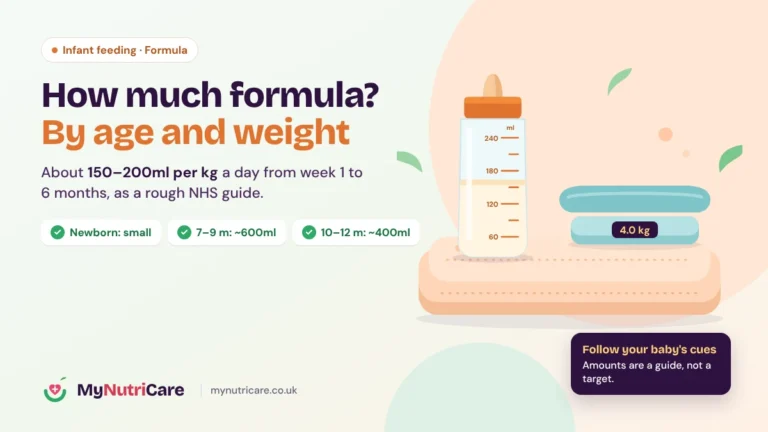
Breast milk or first infant formula stays their main drink alongside food. If you formula-feed, our guide to how much formula by age shows how milk feeds change as meals build up.
Premature babies
If your baby was born prematurely, the NHS advice is to ask your health visitor or GP when to start introducing solid foods. Take your questions about spoon feeding, finger foods or a mix along too.
Speak to your health visitor or GP if...
your baby was born prematurely, has a health condition or a known food allergy, or you are worried about how they are coping with food, including textures they cannot seem to move on from. For allergens such as egg and peanut, our weaning guide sets out the NHS steps.
Make your choice work in your kitchen
This article helps you choose. Our courses help you do it, with the planners and trackers for the first weeks.
Baby-Led Weaning Education
Finger foods done safely: the right shapes and sizes for each food, how to tell gagging from choking, and a first foods tracker.
Starting Solid Foods
Prefer the spoon or a mix? From readiness signs to your first fortnight of foods, with an allergen log, a baby food diary and a gagging vs choking card. For a closer look, see our guide: Formula Feeding Amounts.
See all our infant feeding courses.
Related guides
- Storing expressed breast milk: NHS times for fridge and freezer.
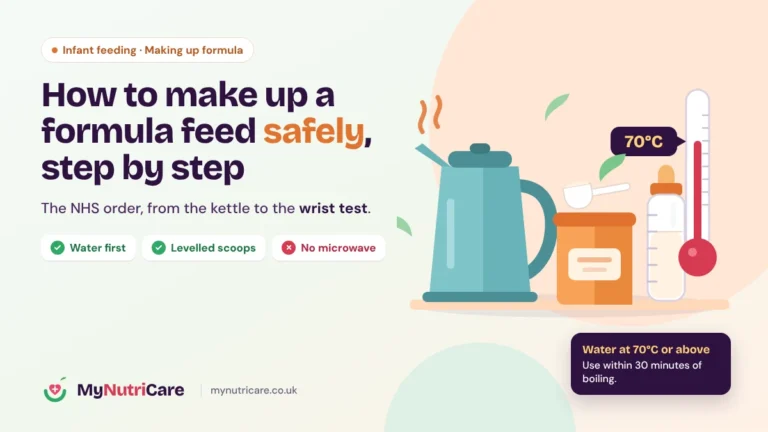
- How to make up a formula feed: the NHS steps and why 70°C matters.
- Choosing the right course: a guide matched to your goal.
Questions parents ask
Is baby-led weaning better than purées?
Neither is officially better. The NHS says some parents prefer baby-led weaning to spoon feeding, while others do a combination of both, and that there is no right or wrong way. The most important thing is that your baby eats a wide variety of food and gets all the nutrients they need.
What is baby-led weaning?
The NHS defines baby-led weaning as giving your baby only finger foods and letting them feed themselves from the start, instead of feeding them puréed or mashed food on a spoon.
Does baby-led weaning increase the risk of choking?
No. The NHS says there is no more risk of choking when a baby feeds themselves than when they are fed with a spoon. Always stay with your baby while they eat, avoid hard foods such as whole nuts and raw carrot or apple, and cut small round foods like grapes into quarters.
Can you do baby-led weaning and purées together?
Yes. The NHS says some parents combine a bit of both. Even if you spoon-feed, it recommends letting your baby feed themselves with their fingers as soon as they show an interest, and offering finger foods at each meal.
What size should finger foods be for a baby?
The NHS says finger food should be cut into pieces big enough for your baby to hold in their fist with a bit sticking out. Pieces about the size of your own finger work well. Start with foods that break up easily in the mouth and are long enough to grip.
When should my baby move on from purées?
As soon as they can manage it. The NHS advises moving your baby on from puréed or blended foods to mashed, lumpy or finger foods as soon as they can, as this helps them learn to chew, move food around their mouth and swallow. Keep offering lumpy textures from around 6 to 7 months.
How much food should my baby eat when starting solids?
Not much at first. The NHS says babies have tiny tummies, so start with small amounts: just a few pieces, or teaspoons of food. Do not worry about how much they eat, as breast milk or first infant formula is still their main source of nutrition. Stop when they show they have had enough, such as firmly closing their mouth or turning their head away.
Sources
- NHS: Your baby's first solid foods (last reviewed 19 February 2026)
- NHS Best Start in Life: How to start weaning your baby
- NHS Best Start in Life: What to feed your baby from around 6 months
- NHS Best Start in Life: What to feed your baby from 7 to 9 months
- NHS Best Start in Life: What to feed your baby from 10 to 12 months
- NHS Best Start in Life: Preparing food safely
- NHS Best Start in Life: Choking and gagging on food
- NHS Best Start in Life: Food and drinks to avoid
- SACN: Feeding in the first year of life (2018)
This article is general information based on UK public health guidance. It is not medical advice. If your baby was born prematurely, has a health condition or allergy, or you have questions about your own baby, speak to your health visitor, GP or pharmacist.